Pirates, pirates all around!

activism ARG blood capitalism cure for cancer democracy future jane mcgornigal LSE piracy

I’ve linked to NPR:s Planet Money before. This time they have an eye-opening story on the pirates outside the coast of Somalia: A ship belonging to a Danish company is boarded and what ensues is a straightforward business negotiation. It’s the most educational 25 minutes you’ll have this week. You’re welcome.

[audio:https://monocultured.com/blog/wp-content/uploads/2009/05/planetmoneypirates.mp3]

Also, in regards to what Žižek and others have said about capitalism being the superstructure onto which democracy or tyranny is latched:

Once they get online unsupervised, do we expect Chinese Internet users, many of them young, to rush to download the latest report from Amnesty International or read up on Falun Gong on Wikipedia? Or will they opt for The Sopranos or the newest James Bond flick? Why assume that they will suddenly demand more political rights, rather than the Friends or Sex in the City lifestyles they observe on the Internet?

→ Boston Review, Texting Toward Utopia: Does the Internet spread democracy? By Evgeny Morozov.
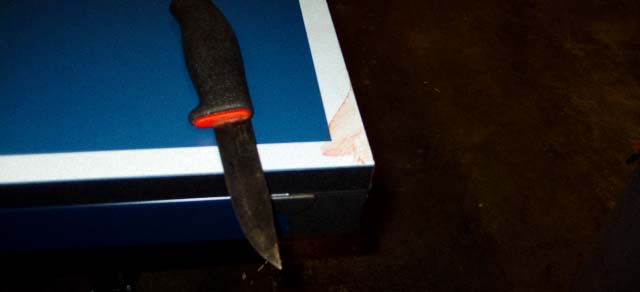
blod och pingpong

A couple of days ago Philipp Rode from LSE (London School of Economics and Political Science) held a lecture at Chalmers on the sustainability of cities and changes we’ll be forced to make. Ana invited me to the dinner afterwards, and rather soon we were talking about what might be the driving force behind such changes.

Philipp seemed to suggest that economic incentives might be enough for private enterprise to adopt a greener stance and long term goals rather than focusing on next years dividends; I don’t buy it, but it’s a majority view and a model of change that most people prefer right now to Earth Liberation Force.

My political analysis is very traditional: It’s class war all the way, baby, and the changes for public good (eight hour workday, voting, right to trial, etc) have all come about with the implicit or explicit threat of violence or revolution. Nothing is ever given, only taken, which posits that whatever economic measures that governments would have to put in place would be met with tremendous resistance.

The objective must be to create a model for and mode of co-operation where radical ecological direct action as well as large scale economic systems can be included as viable routes. How to bring together actors in a way so progress is made in an inclusive and progressive way, one small step at the time? How can a largely uninformed and busy public ever take responsibility and charge of their societies in the long run?
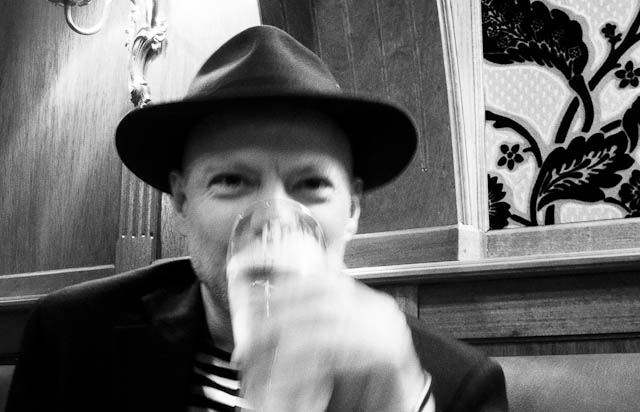
Maybe alternative reality games (ARG:s) can be seen as a method for co-operation? Check out all the smart stuff that Jane McGonigals has to say; She’s is creating ARG:s and thinking about games for a living. As opposed to a traditional game, where little is at stake and there’s no ambiguity as to the puppet masters role, think of harnessing our collective intelligence in search of a solution to a particular problem. I don’t know how far you can abstract “reality” or parcel it up so that people with little knowledge could play with it, but if you could turn the tedious task of long term planning into something fun you’d actually have people who’d want to participate:

As the leading edge of research, industry, politics, social innovation and cultural production increasingly seek to harness the wisdom of the crowd and the power of the collective, it is urgent that we create engaging, firsthand experiences of collective intelligence for as wide and as general a young audience as possible. Search and analysis games are poised to become our best tool for helping as many and diverse a population as possible develop an interest and gain direct experience participating in our ever-more collective network culture.

→ Jane McGonigal, Why I love bees: A study in collective intelligence gaming. [pdf]

Remember how Internet used to be something that you thought only geeks would ever use? Or when email seemed like a fad and you never thought you’d own a cellphone? Well, if you want to be ahead of the curve you really should read what Jane has to say.

Case in point: Fold.it, a game where you muck around with protein in search for a cure for cancer. You learn the rules of the game, and then you’re doing science. For real.

End of show, summery.

architecture chalmers presentation Projects smile teaching work

The course that I’ve been teaching at Chalmers is over. The fifth year students are finishing their masters projects and there’s some running around and mild panic regarding the final exabition, but for all intents and purposes the course itself is over.

It’s tempting to attempt a summery of things that were experienced and lessons learned, but I refrain from doing one giant monster post on the subject and instead maybe shower you with the golden sparks of detail.

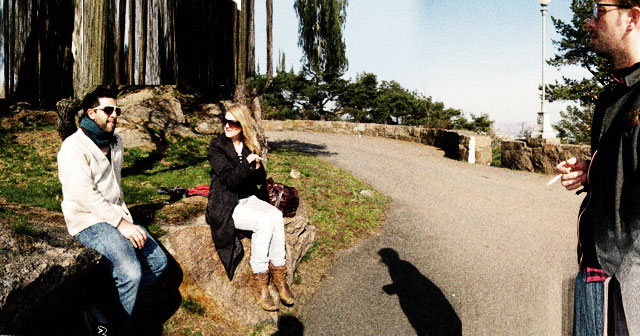
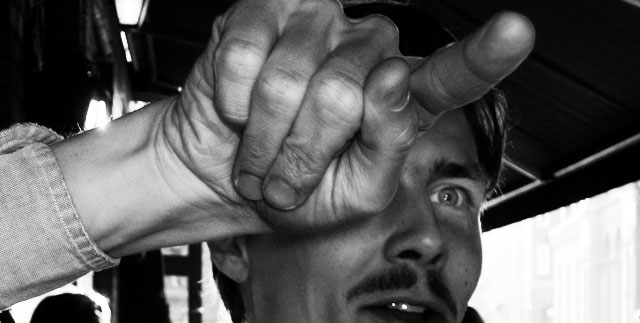
For example: Architect Carl-Johan can be seen below, pointing in the general direction of something visionary and awesome. He joined me and Ana two weeks ago in doing the final critique of the projects. He’s brother of the artist formely known as Andreas-in-Gothenburg, with whom he shares laughter and a mischievous wink.

I smell a target demographic!

aliens disease flu mental hygiene pandemic SEO

Judging from the people visiting here yesterday, maybe I just ought to rename the blog and start selling blow-up E.T. dolls or something. (And all you people who scoffed at my suggestion of doing an intergalactic Hustler! I could have been filthy rich! Hey, maybe it’s not too late? Who’s in? I need models who enjoy nudity and tentacles!)

In other news, here’s a pdf with instructions on how to handle yourself in case the swine flu goes pandemic. In my head this might as well be a zombie survival guide (stock up on food, water and guns) with the exception that maybe you don’t have to “smash their brains” in order to feel safe.

PandemicInfluenza Preparation and Response: A Citizen’s Guide [via Ask.Metafilter.com]

Required reading: Consumer-mediated reality.

advertising america consumerism content future lonely food writing

Signs do, however, point clearly to Apple steering away from consumer as creator of data and toward consumer as data itself. I no longer create the data I sync, the data is me and it syncs on its own.

→ @Lonelysandwich, Adam Lisagor: Why me?

[…] and I will turn to her and say, Honey, uh, honey, there is a certain feeling but I cannot name it and cannot cite a precedent-type feeling, but trust me, dearest, wow, do I ever feel it for you, right now. And what will that be like, that stupid standing there, just a man and a woman and the wind, and nobody knowing what nobody is meaning?

→ The New Yorker: JON by George Saunders.

Certainly the psychologists who have prescribed so much Prozac that it now shows up in the piss of penguins, saw what they did as necessary. And the doctors who enable the profitable blackmail practiced by the medical industries see it all as part of the most technologically advanced medical system in the world. And the teacher, who sees no problem with 20% of her fourth graders being on Ritalin, in the name of “appropriate behavior,” is happy to have control of her classroom. None of these feel like dupes or pawns of a corporate state. It seems like just the way things are.

→ Joe Bageant, Escape from the zombie food court. [Via metafilter.com]

New new journalism and its discontents

journalism monetise it project rant

My brother and I have been pitching a project to a couple to newspapers. it’s about interactivity and making the value of journalism transparent – a meta project where the end result is still valuable because it’s hard work and doesn’t rely on shouting first but rather articulating a subject well. In the age of borked analogies, good journalism is like a well knit sweater – You might know how it was made and even have the pattern for doing it yourself, but you’d much rather just wear it than bother with the production. (I’m not paid for writing good analogies.)

Above all, good journalism shouldn’t be about springing surprises on the readership. The belief that exclusivity and having a scoop is what makes newspapers relevant is one reason of why the news industry is frantically grasping for straws (We’re on Twitter now!) in hopes of looking hip, while at the same time not allowing the new technology to affect how they fundamentally view their role in society and the function that they fulfill for their readership. (And advertisers)

Clay Shirky has a brilliant quote in one of his posts on the subject:
One of the people I was hanging around with online back then was Gordy Thompson, who managed internet services at the New York Times. I remember Thompson saying something to the effect of “When a 14 year old kid can blow up your business in his spare time, not because he hates you but because he loves you, then you got a problem.” I think about that conversation a lot these days.

→ Clay Shirky, newspapers and thinking the unthinkable.

Maybe we’ve gotten it ass backwards; Maybe we ought to be going at this as independents and establish our own platform instead of joining an existing one, but there’s so much knowledge amassed in the old journalistic institutions that it would seem a waste to disregard it. Just because the owners and directors can’t make money off of their papers doesn’t make the journalists themselves any less useful or interesting, so it’s disheartening to see where reporting seems to be heading and what lack of confidence journalists have in their own craft.

RP: I thought the whole theft / not theft debate was settled?

Art author copyright crap creativity piracy prison tbp

Crossposted from Metafilter on the subject of todays court ruling against The Pirate Bay in the lower court. Let’s see how it all will play out. In the mean time, I tried to formulate a few thoughts – They’re mostly rehashings of what has been said again and again by people a lot smarter and visionary than I, but what the hell is a blog good for if not self publishing? Check out the mefi thread for the discussion.

Copyright infringement is a violation of someone elses monopoly on exploiting whatever it is that falls under “intellectual property” and isn’t covered by patents or similar legal devices.

If I download an unathorised copy of a book you’ve written, it doesn’t follow that I’m causing detriment to you. Of course that could be construed as a cop-out — “Oh, I wouldn’t have bought that anyway” — but it’s a valid argument. Also, I could maybe even profit from it, (one of the charges levelled against tbp) but this does not automatically constitute detriment to you, unfair thought it might seem. (Big corps fucking over small time artists is a familiar theme)

I might enjoy your book, but that is a weak argument since it’s about moral right more than financial or other damage to you or your ability to make a living as an author. It’s saying “only if you pay me are you allowed to enjoy my work” which seems reasonable but is about your feelings and convictions more than detriment caused.

There are technical aspect to consider in this as well; If I use Bittorrent and seed as much as I leech, I might aid someone else to your detriment (Oh I don’t know. It’s an unedited copy and it’ll garner you a negative review. Or that other person is someone who otherwise would have bought the book. Whatever.) which of course has a bearing on your argument. (Difficult to measure though.)

But you need to differentiate between purely moral arguments which are founded on your thoughts of authorship — originality, uniqueness and the “creators” right to his/her own “work” — and more practical and pragmatic convictions and policies (A majority of our population believes musicians should be able to make a living off of music) and the implementation thereof.

Regardless on what side you come down on, the very way the Internet works forces the issue of copyright infringement to come head to head with other interests. It’s not fair, but in this case I don’t see how you can imbue technology with morals or a material model of scarcity.

Every decision that has been made lately (In Sweden as elsewere) regarding laws online, have eroded the notions of right to privacy in favour of political and financial gain. As much as I like having such a plethora of music, books and film to choose from, I’d rather have my privacy.

But until the fear and shortsightedness is beaten out of people by one fifteen year old with time on her hands after another, let’s put the same broken record on once again, shall we?

To whomever. According to Artur

artur pocas identity infidelity Photography To whomever twins

Let’s hear it for Artur Poças, the latest participant of To Whomever and one of the students at the course I’m teaching with Ana Betancour. Who could ever guess that there’d be so different takes on what this project was about? Thanks for the contribution, and email me your address – sending stuff by post has a nice haptic feel to it.

My name is Mathew Price. I came to Europe very early in my life and now I’m living in this small boring town where nothing attracts me more than my own room or the beautiful fingertips of my girlfriend, Therese.

Day one

My twin brother came to live with me. He left our parents house, I did the same some years ago and, apparently, the reason is the same, he became a vegetarian and our father told him: “if you want to eat plants, go to live in the garden, there are plenty of them”.

After so many years, his voice still echoes inside my head.

The good thing is that I found a job for my brother at the school, is going to teach with me, starting tomorrow.

One week later

First day at work, my brother fucked my girlfriend in our dirty bathroom at school. She thought he was me (eight years together and she doesn’t know I don’t wear silk underwear). He didn’t think at all. I broke up with both.

After all

Today I received the news by mail. She’s pregnant. Therese. For many years we tried an absurd amount of times to conceive a human being. Never succeeded. The fucker comes from the other side of the world and, with just one shot, guess what?

Twins

Rwanda and the boats from Denmark

boats ferry fucked up gif animation humanity machete rape war

I need to increase my carbon footprint lest all the cool kids make fun of me, so I’ve taken to printing articles and reading them on dead trees. While sitting by the docks and counting ferries coming to port, I was reading a piece on Rwandan ex-minister Pauline Nyiramasuhuko, the first woman ever charged with genocide. The article focuses on her role in the utterly fucking horrendous shit that was 1994 Rwanda, but more specifically at the policy of rape and murder of women in war:

In an interview at the State House in Kigali, Rwanda’s president, Paul Kagame, talked about the mass rapes in measured, contemplative sentences, shaking his head, his emotions betraying him. ”We knew that the government was bringing AIDS patients out of the hospitals specifically to form battalions of rapists,” he told me. He smiled ruefully, as if still astonished by the plan.

→ New York Times: A womans work, by Peter Landesman.

Jonas and the stars.

fantasy göteborg science bitches! space travel stars visiting friends

Jonas, the most charming man who ever rode a fixie, visited with us the past couple of days. We spend a couple of days sightseeing Gothenburg and a couple of nights sightseeing bars. As it turns out I don’t really know this city as well as I ought to considering the six years I’ve done here. It’s odd what you find out when you’re a tourist in your own city. For example: It is very difficult to find a totally dark place where you can observe the stars, even if you go out of the city.

As a kid I remember staring up at the night sky, feeling both awe at the vastness of the universe and an aching sense of unfairness that I might not get to go out into space and travel between stars. The books I’d read and the movies I’d seen had made the sensation of space exploration so vivid in my mind that I could almost sense the hum of engines under my feet and taste the stale, reconditioned air.

The sense of loss was not about privilege lost; It wasn’t parents or class or education that was holding me back, but rather our limited technological development, and as such this acts as a great equaliser: We have but to look up to recognise the inconsequence of our own wishes – or least some of them – and there’s something liberating about it. It might remind us of the limits of human experience, but just as death is malleable, these limits are material and not absolute.

The emotion I experience looking at the stars is sadness at not getting to go, but also a brazen defiance, a reassurance: If only I could live long enough, it would have been me.

Art. Bees. Wax

Art bees interaction internet storytelling Video

Waxweb had totally passed me by. It’s an online movie experiment that’s going on twenty years old. Most people didn’t know Internet from a hole in the ground when this was made, and it is still really good.

To speak with today’s terms, there’s a Matthew Barney + Lost feeling to the story of Jacob Maker as the beekeeper who works on flight simulators. I haven’t watched the whole thing, but there’s a hypertextual element to it (make your own adventure multiple choice type of thing) as well as a nonchalant appropriation of footage.

The everyday feeling of what is taking place makes it all seem so much more surreal but plausible – no-one would fake something this improbable. Atonal sounds help to reinforce the sense of unease and apprehension.

The Playstation and 3DO game Psychic Detective comes to mind as I’m watching Waxweb. It was a relative early attempt at interactive storytelling, and I was enthralled with it despite having to switch between a bunch of cd-s all the time. This link gives an inkling of how it might look, although the gameplay isn’t very obvious.