There is one thing all of us have in common.

Besides dreaming about taking a spaceship boat into the great unknown, another popular escapist fantasy is gardening. Back to the hoe and the illusion of self-sufficiency. Annas brother Andy has gone nuts with the two plots he’s running and generously shares his veggies and thoughts on gardening. Apparently planting in “mixed squares” is what the cool kids are doing these days.

So we’re sitting in a bar, me, Olle and a couple of his friends, when someone starts talking about how there’s this one gardening collective nearby that gives out new plots to people based on who’s there earliest on a particular day. Because we’re drinking beer it seems like an awesome idea to show up on that day and sign up. There’s talk of bringing a tent and camping outside to ensure a good place, and the more beer we have the more enthusiastic we are about the enterprise. We’re gonna grow carrots and beans and flowers and that salad thingy whaddaya callit, oh yeah “chard,” chard is awesome, gotta grow it hey who’s more beer want?

I had already beed offered to share a plot with Anna and Andy a while back, so I can’t really put the finger on why I thought this was a good – or new – idea. Maybe it’s nest building; I own a bed and a laptop, and have nothing but student loans and library cards in my own name. I have no material sense of belonging, so perhaps a 7×7 metre plot of land holds an allure of homesteading? (Technically it wouldn’t be my plot since I’d be sharing it with Olle, but it would be my name on the deed.)

Or maybe it’s the peripheral stuff that appeals to me. Unlike other projects I’ve been enthusiastic about, this one happens to involve someone else which gave it enough momentum to be carried through. The project would in that case obviously be “queue early in the morning” and not “gardening.” Anyway.
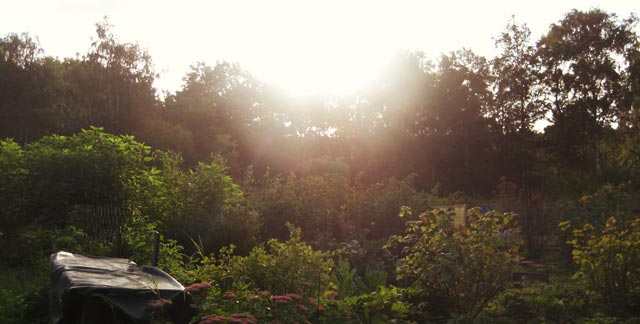
kolonitradgard_motljus

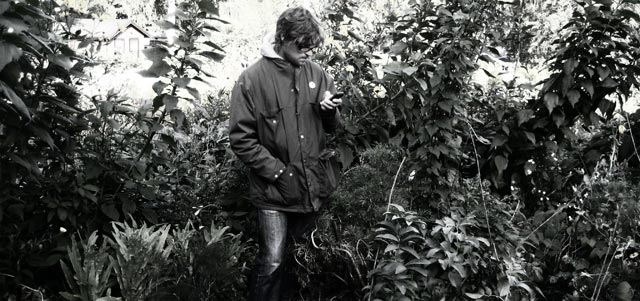
Erik_i_kolonilott_mobil

Like many ideas that are spawned while merry, this one was blissfully forgotten until I happened upon Sara and she reminded me. It turned out that the signup occasion was just around the corner, so me and Olle decided to spend Friday sober and stand in line before eight on Saturday morning. Waking up early is always painful unless there’s someone with a cup of coffee or a my dick in hand, but I drag myself into a pair of shoes and onto a bike. Olle was standing with a very manly scarf by Röda Sten, scanning the river and trying to come up with a clever remark on my tardiness.

Instead of looking at a map and learning the proper road to get there, we lock our bikes and take the same goat path that Olle had walked on the evening when we first spawned the idea. “Not the fastest way but we’ll get there” is the sentiment which has us struggling up a mountain. We’re walking up the the crags by Röda Sten – where the dub party took place a while back – and at half seven in the morning it makes for unsteady and whining progress.

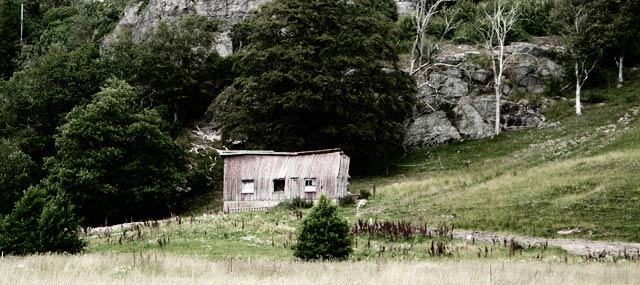
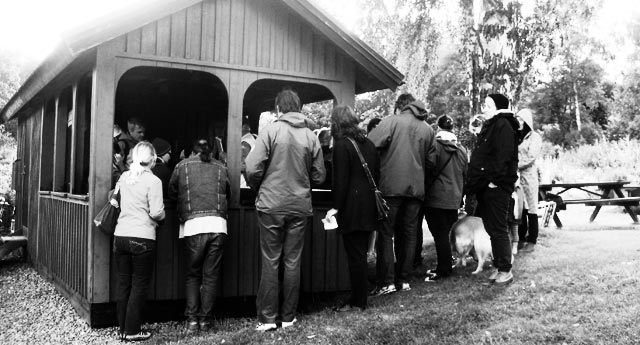
A small trail leads us through the patch of wood and we emerge onto a parking lot next to a community garden. It’s not the one we’re heading for, but just around the corner there’s another garden and we can see people milling about. Unless they’re the gardening undead, they’re there for the same purpose as we. Someone has posted a bill with numbers, and we pull our tab. It’s not even eight o’clock and there’s already 14 numbers gone before ours; Some have been there half the night and the mood is subdued albeit cheerful.

We settle in, wait for the sun and drink coffee from a thermos. Had me and Olle been gay it would have been romantic; Others are sitting on benches or walking through the different gardens and it’s indeed very pretty. 120 small plots of land are being cultivated in as many ways; From a distance I can only recognise the sunflowers.

One of the guys who’d originally informed us about this event shows up. He’d been there at six, but took off once he had his number secured. He showed us around and I get to eat raw borlotti beans. Someone shows up with a portable beehive and is describing its function to some kids who are delighted and frightened. More and more people come and before you know it it’s ten o’clock and we’re signing our names on a list.

That’s it. There’s no certainty that we’ll get the plot, but I and Olle are now officially #15 on a waiting list, hoping for a call in November or thereabout. I haven’t started in on the seed catalogues yet, but I’ll get there I’m sure.
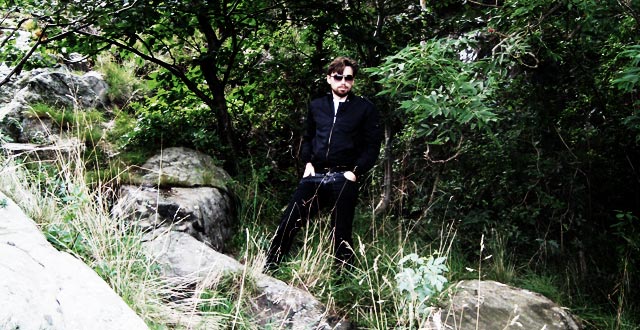
Cue_kolonilott

Mateusz_kolonilott_i_skogen

We saunter back down the hill – Olle would badly sprain his ankle on the same slope a few days later – and I go home to start a productive, although comatose, Saturday. There’s much more to say about the whole nesting thing, and should we get started with growing stuff I’m certain that I’ll be dumping all manner of ambitions here, but until then this post might serve as a reminder of how things get started – not with a great plan but for the hell of it, with a fuzzy idea based on nothing but a hunch.

It just struck me that I’m not the only one who is nourishing make-believe escapist ambitions among my acquaintances; is this an age thing? Is 31 the age at which you want to find meaning in life and feel the dirt beneath your fingernails and whatever? Maybe I just ought to compost myself on the plot and fertilise someone’s produce; I’m sure “corpse potatoes” would fetch a good price on eBay.

Burlotti_bean

Post title from Depressing Comic Week over at Explosm. They’re already famous, but I bet you don’t read it.
Extended warranty. First day on the job.

So me and Wakaba were discussing the finer points of Family Guy references when she pointed out that the crack I have on my Macbook might be covered by extended warranty. I’d like to think that the gaffers tape I’m using lends my laptop a certain patina – an anti-shine of cool – but called Apple up just to check. Turns out that I qualify for a replacement so what the hell, might as well prolong the life of my beloved companion.

I think that the support drone at Apple had just started working there. He was adorable: Nervous as hell, he was humming under his breath before deciding on which line on his screen to read. There was silence ten seconds at the time and I imagined a guy who frantically is reminding himself “Don’t read the stage notes aloud, don’t read the stage notes aloud!”

He exuded a fear akin to the one you might experience when you’re being asked a question you’re supposed to know the answer to, mumbling something in response that might or not sound like something that maybe possibly is in the vicinity of a vague statement resembling an answer.

— Of course I remember your eye colour, baby; It’s brueen.

He hesitated on every word and only sounded confident reading whole sentences verbatim. “I would like you to know that we have extensive support available on our homepage” was the one time he didn’t finish a sentence with a question mark. Plainly adorable, like a puppy fighting a blanket.

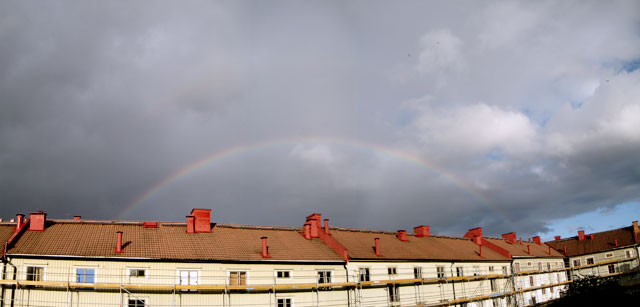
Regnbage_over_Grona_Vallen

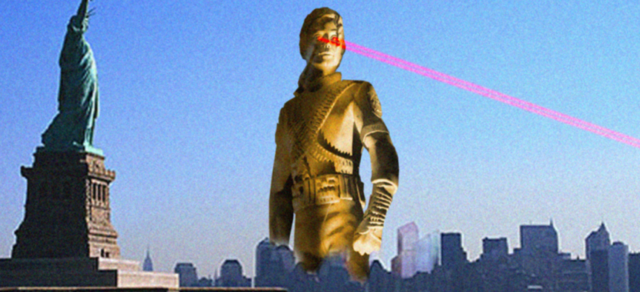
Michael Jackson Ganglia Assembly

You know that one time that you and a friend showed up for a marathon and realised too late that you’ve signed up for a competition for “special children” but can’t really back out cause you might win the chocolate trophy; Besides you already paid the fee and have running shoes on? Well, Bustler and Archinect ran a Michael Jackson Monument Design competition and the entries are now available for voting on, and they’re of mixed quality.

Some contenders didn’t bother to look up “monument” in the dictionary but lept straight for the lens flare filter, while others did cute conceptual pieces. A few are good: Permanently exploding atom bomb Michael Jackson and Anti-terrorist Golden Statue with Lasers go for the humour. Lift & Slide is the only installation which seems thought through and MJ Sperm Bank is cute, but the rest are mostly photoshops of Michaels feet and the moon.

MJ_Anti_terroris_gold

MJ_nanobot

Go vote for my anti-cancer nano-glove. Let the others get their “You’re also super!” diplomas. I want that chocolate trophy and special groupies.

Your backfat is encroaching on my private space!

They scratch their balls, take up your elbowroom and eat crisps with their face halfway down the bag. They keep their knees wide and their coats on should you be tempted to steal the smelly Canada Goose. Their cellphones are never muted and they let it ring instead of denying a call. They look at you over the rim of their Dan Brown novels with blank, unblinking eyes.

I had a perfectly good seat on the train back from Stockholm, but traded with a girl who wanted to sit next to her friend. I should have checked where she was seated before accepting. I spent two hours composing a diatribe against my new neighbours. I went over the top and felt rather judgmental afterwards, but fuck it, I was riding backwards which always makes me want to vomit and sleep at the same time. Minge minge.

atombombmoln

3D printing. Fabbing. Lockpicking.

Jonas has graciously spent time with us in Gothenburg and just got back to Stockholm, the town north of here. I’ve signed up for a few more dives and am looking forward to that. SKUP PALET, the art organisation that a bunch of us have started, is slowly getting its shit together and it looks like we’re going to represent at an art fair in Copenhagen. I visited Arcam today, the Gotheburg company that produces stuff in titanium that I wrote about in the post on rapid prototyping, and had a chat and a tour of their facilities; I got some insight into how specialised their buisiness model is, with only 50 machines worldwide.

jonas_kuk

As research before my MFA lockpicking presentation I interviewed Marc Weber Tobias. He had forwarded his Skype account to his cellphone and talked to me as he stopped for gas somewhere in a desert. The world felt just as small and awesome as when I was in high school and interviewed NASA for the radio show we were doing. (The feeling being “I can call anyone and ask anything!”) There’s an article on him and his doings over at Wired, which you might enjoy.

→ Wired, Charles Græber: The ultimate lock picker exposes weak military installations, corporate systems

What comes through in the article – beside his drive and intelligence – is the lack of patience with stupidity and a genuine fascination with stuff. It’s a quality that many nerds and other obsessive people share, and I sympathise with it. It’s this fascination that I was trying to gleam at my meeting with Patrik Ohldin at Arcam.

Of course, coming from a sci-fi reading background and with my head full of ideas on the end of stuff that rapid prototyping is hearalding, I felt much as the city kid staring in awe and disbelief at someone milking a cow. Patrik had a much more buisiness minded approach to the technology; He keeps abreast of what is happening in their sector, but the changing human perception of what originality implies in the face of CAD-to-production just isn’t part of their business. Making spare parts for humans and cars is.

It was nice to see what they were up to, and it’s always exiting to learn first hand about hight tech stuff, but now I feel I’d need to complement this excursion with a visit to the lo-fi end of the spectrum. Are there any home-fabbers in Gothenburg? Point them in my direction.

hustopp_moln_svv

petter_motljus_moln

iTard

The past five years I’ve had portable audio players with me much of the time. Filled with audiobooks, podcasts and lectures there is hardly a minute where I can’t be found with earplugs. I’ve grown so accustomed to having them in that I sometimes wear them without anything playing. It’s not as if I experience phantom pains if I don’t wear them, but I hardly register their presence anymore, and the second I’m not reading I’ll start listening to Science in the city or Arts and Ideas or any of the other 40 odd podcasts I’m subscribing to.

A couple of years ago I killed my mp3 player with excessive volts. Later the same day I walked to the store and heard birds for the first time in a good while. Their chirping reminded me of the time I was wasting. Every minute I walked without headphones on was a minute I wasn’t learning stuff. I remember walking faster only to get back to some sort of content. Too broke to pay I bought an iPod on credit from the store I was working at the next day.

Of course this has nothing to do with actual learning. It’s not even a pursuit of trivia or satiation of a particular interest. It’s the idea that time ought not to be wasted and by learning stuff you become better – whatever “better” means – and becoming better is better than not becoming better.

In the end I find that much of what I listen to doesn’t stick; I’ve become a good reference for references, but don’t retain much information, nor any big picture stuff aquired through osmosis. The articles below deal with this and they are worthy of your attention if you can manage reading for longer than three minutes.

hus_stewie

klippa

He sees our distraction as a full-blown epidemic—a cognitive plague that has the potential to wipe out an entire generation of focused and productive thought. He compares it, in fact, to smoking. “People aren’t aware what’s happening to their mental processes,” he says, “in the same way that people years ago couldn’t look into their lungs and see the residual deposits.”

→ New York, Sam Anderson: In defense of distraction

His thinking, he said, has taken on a “staccato” quality, reflecting the way he quickly scans short passages of text from many sources online. “I can’t read War and Peace anymore,” he admitted. “I’ve lost the ability to do that. Even a blog post of more than three or four paragraphs is too much to absorb. I skim it.”

→ The Atlantic Online, Nicholas Carr: Is Google making us stupid?

The Internet, paradoxically, empowers both the individual and the state. On the one hand, it allows people who had no way to express themselves before, whether for political or economic reasons, an outlet to do so. The Net also makes it much easier to find out what people in other countries are thinking. On the other hand, it gives governments a better view into their citizens’ activities. There’s a danger that some people might mistake the apparent anonymity of the Net for true anonymity.

→ The Sun, Arnie Cooper: Computing the cost; Nicholas Carr on how the Internet is rewiring our brains

The Pirate eBay and other scenarios.

I’ve been trying to get my head around 3D printing. In the futuristic sense of the word it’s the manufacture of a hot dog complete with relish and mustard. It’s such a transformative technology that I’d like to get in on the game somehow, not only read about it. This is an attempt to put stuff onto paper. Pardon the rambling.

Let’s divide the making of things into five mechanical categories, and see if something useful comes of it: Additive, subtractive, shaping, combining. (Molding might be the fifth, or perhaps it’s of the combination order where the object that is being created is the mold, which combined with steel or what–have–you causes the negative object. Ignore for now.)

The combination of things requires things to combine, the shaping of things requires a material that is malleable besides whatever other qualities you need, the subtractive production (milling, cutting, etc.) need a hunk of material that is bigger than your end result. The additive model allows you to work in multiple materials, at once combining things for whatever function you need them to fill. Today this mostly means a working ball bearing or a surgical knee replacement. This is the technical side of things.

FJARR_AB_conteiner

Some are predicting wholesale piracy, and once the technology becomes cheap enough eBay will surely be flooded by original copies just as The Pirate Bay will be flooded by CAD/CNC program instructions. The joke isn’t lost on anyone that the name of The Pirate Bay will rub off on the auction site once everyone with a RepRap or MakerBot gets up to speed with replicating materials. And why not?

If the remix and DIY approach will hold true for personal fabrication (fabbing) then you’ll be forced to shift gears from “is it what it says it is?” when you relate to objects, to “is it what I want?” Trending and social constructions will still exist because we’re social critters, but they will have to take something else into account (another quality or justification, however arbitrary) and branding of objects might become less relevant.

Michelangelo’s David has been 3D scanned by Stanford and they’re limiting access to the the model, but how long before it’ll be pirated? Once you have an accurate replica next to your garden gnome, does the original matter at all? (If being original is the bees knees, why so afraid of copies? If it’s only a matter of making money by selling the reproduction rights, the losing battle that the music, film and game industries has fought the past ten years is on the doorstep of museums and industrial designers.) Home fabbing is killing IKEA!

We’ll manufacture and use stuff as if it was real but with no sense of “real” left. It’s the post-scarcity of technocrats combined with a corruption of the traditional understanding of materials. It’s a change in volume and sheer numbers, if not in the way we approach things. Material nihilism maybe?

[flv:http://www.monocultured.com/blog/blog_video/Bruce.flv http://www.monocultured.com/blog/blog_video/Bruce.png 640 360]

Above is the latter part of the end keynote that Bruce Sterling gave at the ReBoot conference. [via Warren Ellis] It’s his take on where we’re heading ideologically and how we can find value in life. He does sound like a whiny old fart part of the time, and there’s little love for his audience, but it’s an articulate rant and I’m not one to scoff at someone who thinks about these things for a living.

Sterlings notion that we ought to get a proper bed and a proper chair make sense if what is left of the objects are our use of them and if the value they provide are somehow measurable by us in a non-arbitrary way. (“Being well rested” is a concept we understand. Extend this to more arbitrary objects and you’ll notice that we have few things that actually carry meanining in the sense that an object in and of itself carries meaning.)

Jamais Cascio referenced the speech with specific regard to how Sterlings ideas relate to 3D printing. Cascio draws parallells to what Postscript and LaserWriter did for desktop publishing in the mid 80’s. (Hollow, bold, underline, cursive Chicago, anyone?) The article is The Desktop Manufacturing Revolution and it’s a good overview of the technology and some of it’s implications.

tvattmedel

We should stop saying ‘Is this a good thing or a bad thing?’ and start saying, ‘What’s going on?’. It’s a quote attributed to Marshall McLuhan by Liss Jeffrey and it’s a sensible suggestion.

While teaching future architects at Chalmers I was impressed by their approach to materials and created objects. It is as much a part of their problem as it’s a boon, but they all treated their models as incidental to the process of architecture. The objects didn’t hold any value except what they said of the overall project.

This is in line with how rapid prototyping has been used up to now, and also diametrically opposed to how many artists approach objects. Technically speaking, an artist can’t take a shit without creating an objet d’art, so we tend to guard whatever physical objects we produce. (Piece of art and piece of shit is interchangable in some peoples minds, but even for them it’s the piece that is important.)

But where an architect might view the printed 3D object as a stepping stone to a real object, fabbing offers a rejection of specificity of objects all together – i.e. a knife at your throat bears meaning on your life and well being, but it’s not really important what kind of knife it is. In this hyperbolic example you would do well to ask the McLuhan question: Is the thing at my throat sharp enough to harm me?

I’m being silly and perhaps these ideas don’t apply to all situations, so let’s focus on art and 3D printing. First of all, we’ll have the meta art: “Ooh, you’ve carved a small replica in wood of something that you randomly generated in your 3D printer to make a point about originality. Good for you!” It’s unavoidable and to a certain degree interesting for the debate and theory (I made my Virtual Photography series because I wanted to make a point about virtual worlds and photography) but it’s the next step that will be interesting: The abandon of material sacrament.

audi_hos_jonas

Artist scientists, spefically mathematicians, have experimented with rapid prototyping and sculpture. They are in the odd position of celebrating the pure æsthetics of mathematical shapes and concepts. Carlo H. Séquin is a physicist who has collaborated with artists and sculptors who work with pure form. His article – Rapid prototyping: a 3d visualization tool takes on sculpture and mathematical forms – is the only artistic reference Wikipedia has on 3D printers, and it has very little to do with modern art. The area seems ripe for experimentation.

What I recently wrote about ARGs (Alternative Reality Games) seems applicable to 3D printers. You get an excuse and a means to remake the world in your own imagination or buy into someone elses, literally. Interpretation and allegory – traditionally the priviledge of priests and artists – is now a technological issue, not a metaphysical one: If you can print anything that money can buy you might as well print money. Fake money buying fake things in a fake world; Truly a map on a 1:1 scale if there ever was one.

cyclist_road_tunisia

If it wasn’t for the inertia of societies the end of this process would find us in a copy of Second Life where we’re all pointing at colourful things and going “meh”. As it stands, this process of virtualising maybe isn’t about shifting the way we manufacture and appreciate things, but will help us remove the clutter – take away everything that isn’t interesting and special and super and reveal the social superstructure onto which the objects were fixed; That designer lamp you liked is only a Google Warehouse click away. (Much in line with what Sterling is suggesting, but not because of an appreciation of craftsmanship or purposeful living but because it’s meaningless in a literal sense.)

Besides the artisan or mundane stuff that we for one reason or another love, objects are deconstructed in a way we should recognise, that of Platonic idea and instance. (But here the idea of an idea isn’t a reductionist problem but the foundation for discussion, the new modernity as Nicolas Bourriaud put it in a recent lecture at Valand.) It’s as if the object becomes stretched out in two directions until you have the plastic, wood and metal in one hand, and an idea or social category in the other. Ceci n’est pas une pip and so on.

I might be lacking whatever gene it is that makes some of the bicycle people not as enthusiastic about my boom-bike as I am. I see it as an instance of a bike, an embodiment of features and designs and materials that under other cicumstanced would be a fancy Bianchi. So when I see the titanium rapid prototyping that Arcam offers I imagine that I could recreate my beater as it was built. The object is incidental, what we imbue it with is not.

You could argue that I am a vulgar person with no appreciation for workmanship. And you would be right.

She knows what she likes.

My mom isn’t as sentimental as I thought she’s be. She recently moved away from the place where she’d lived the past 24 years, and took the opportunity to trash paintings and sculptures that previously were cherished as valuable objects of beauty and tokens of love. “Aaw, did I hurt your feelings? You’re a grown man and I can’t be expected to keep all this crap!” It took some work to convince her that the heavy raku chalice/ashtray that I’d gifted her ten years ago was worth keeping; I had dug the clay out from planet earth myself and built the oven over days and weeks before that piece was made! I think she tossed it while I wasn’t watching.

Her inner critic manifested in tossing the potatoe-print oil painting of a tree I made a couple of years ago, something I was utterly ok with. I mean, there’s a limit to the motherly indulgence.

Also, she’s always hated the comissioned painting of her home town that’s been hanging in the living room, and took the opportunity of cutting it in half, keeping the part she liked. That antenna annoyed her to no end.

There’s an anecdote about a painter who sold a painting and later showed up at the buyers house and start touching up his work. The buyer goes “WTF!” to which the artist replies “I’m not done yet.” My mom has wished that the artists would show up on her front step with a saw for the past fifteen years. I was glad to help.

The autopilot hypothesis.

phantom_mateusz_by_tobbe

Being a literate and angsty teenager has its benefits. For one, if you’re as pretentious as I was you will see yourself as a writer, poet and deliverer of truth, and learn touch typing while you’re smoking pipe and pounding on a typewriter.

Helping my mom to move the other day, I found my old texts in an envelope – writings for the learned scrawled on it – and tried to recall what it was that I though so important. (And why was I such a pompous douche?) I remember having very strong opinions on religion and politics, and the usual teenage frustrations with sex and violence, but I don’t remember why I thought them so important. Who did I think I was back then and where did I see myself heading?

After a while you cement your image, your convictions and personality, spending a ridiculous amount of time justifying them and surrounding yourself with people who fit them. Along the way you change bit by bit, all the while telling yourself that you’re the same person and fully justified to do these changes to yourself even in the face of past ideals. “Never work for the state” becomes “unless it’s really interesting,” “I’m a nice and just person” changes your definition of “nice” and “just” as you improvise a life together.

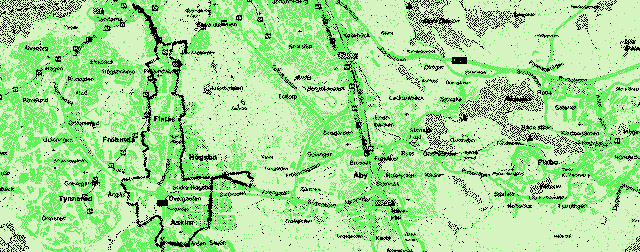
Karta över 21 km löprunda

All of this is a roundabout way of saying that I ran 21 kilometers the other day and it got me thinking. One year ago I would only stop smoking long enough for the asthma attack to pass. Now I’m jogging, biking, and doing pushups because I feel like it. I don’t know what this means, and I don’t have a specific goal with the exercises, but it seems something has changed.

Fitness and body ideals seem like secondery issues. The interesting part of these changes is looking for what remains the same. How far does the idea that you become what you do extend? Judith Butlers suggestions regarding performativity seems to apply here, but is there something apart from the performace? What is the impetus of our continuous performance?

Do we just adopt habits and internalise them well enough to call it a personlity?

Meeting my childhood friend Albrecht the other day he commented that he saw no fundamental change; Whenever I decide to do something I overdo it, and this pulseclock–wearing version of myself is just a variation on a theme. So there maybe is consistency, that might be personality.

phantom_mateusz_by_jan

Those who met me for the first time when I’d just gotten the moustache know me as someone who takes pride in facial hair. My former students might recall a stammering slideshow and those who saw my MFA presentation still ask about lockpicking two years later.

Personal DNA is an almost broken website which allows you to do a personality test and then lets your friends do the same test on you. It shows the correlation between your self-image and what your friends think your self-image is. I filled it out for Anna and a few others and got a 70-80% match. When others filled out for me, the correlation was 40% or less. On the face of it I agree to 40% with my friends about who I am.

It might be all narcissism, but it’s Nacissus with Alzheimer’s: Wait, who’s that dude and why is he doing pushups?

phantom_mateusz_by_anna

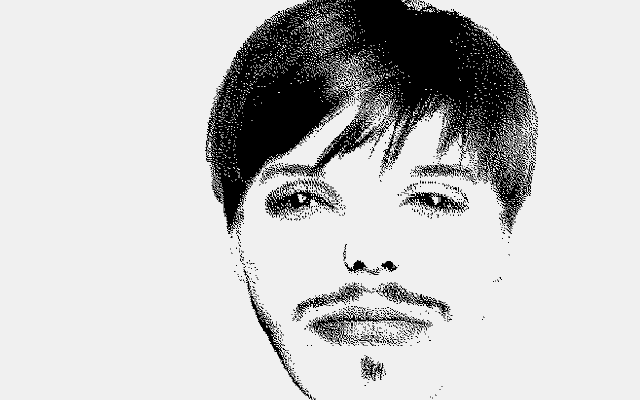
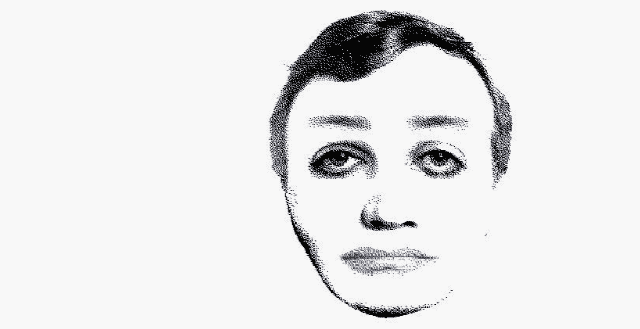
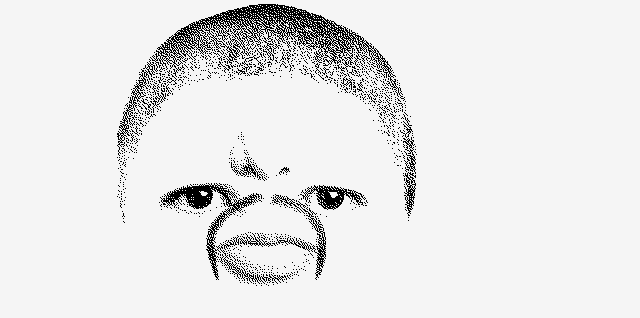
The above images are portraits of me made from memory by Tobias, Jan and Anna using Flashface. If you’d care to do one of me without cheating, send me a screen dump and I’ll post it here. Also, try it on your friends and family, it’s harder than it might seem. Do your parents know what you look like?

–––––––––––––––––––––––––––––––––––––––––– Updates ––––––––––––––––––––––––––––––––––––––––––

Ian Campbell sent his version:

Mateusz_according_to_Ian

Jonas Isfält showcases an uncanny sense of humour with his contribution:

mateusz_acording_to_jonas_I

Closure. Sea-fairing life. Birthday. Bike!

The other day, while helping a friend move out from the apartment he shared with his girlfriend, I was wondering how I would have reasoned about dividing up stuff. It’s never occured to me that stuff like this would come up (which is telling of how experienced I am with relationships) outside of movies where a couple that are breaking up bicker over record collections. Your material possessions don’t so much possess you as they socially glue you to your surroundings; Stuff as interaction manifested relationships in itself, or somesuch.

–I bought this jar of pesto and by God I’m taking it! Oh, and this water heater that you bought only after breaking mine? I’m trashing it by accident, fuck you!

The only thing we trashed was an oven form that I dropped a bed frame on. Ah yes, the spoils of war and love.

Midsummer was spent in the lovely company of friends, and my birthday was spent on a boat with Anna & Jan and an engine that only fired on one cylinder and gave up the ghost next to the industrial dry docks on the shitty side of the river. Improvised team building, as it were. After poking and swearing at the engine for half an hour, we called Janne who was all manly and stuff, actually managing to fix the engine well enough to get us to an emergency port. My contribution to our efforts was limited to sunbathing and being a human fender.

(Before you ask: Yes, I do keep tabs on who forgot my birthday. You are on a passive agressive shit list.)

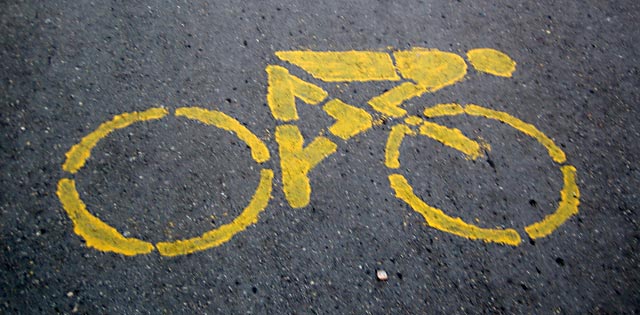
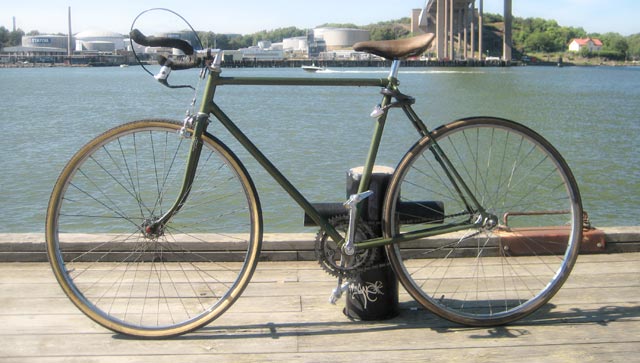
I’ve spent the past weeks learning how to scuba, working on my Polish tan, doing some freelance web stuff and buying a bike. And even though diving is great fun, I love my bike silly. There are many like it, but this one is mine! I’ve never had a bike this fast and I love me the commuting and silent cruising down dark streets.

True, the first thing that happened was that the front brake gave up on me – unsettling since it’s the only brake – but it’s given me reason to learn about fixing stuff, something I’m usually only good at in theory, or rather “theoretical theory,” meaning I know how to use Google. (which I call “knowledge aquisition” in my CV)

The bike is a frankenstein of different parts put together by Martin, and I posted a description + pictures on Happymtb in order try to identify it. I haven’t received much help in regard to identification, but plenty suggestions on which wheels I could get and how much a paintjob would cost. People I’ve asked seem to lean towards that it’s a French 70’s cheapo bike; Looking at old Peugeot models they have some similar details. If you have any hints, I’d appreciate your input.