Category: Doodles

Day of the Triffids: Post-apocalypse made for TV

apocalypse bbc bump in the night movie adaptation sci-fi triffids

A while back I read The day of the triffids, a 1951 novel by John Wyndham. It’s a post-apocalyptic tale where one accident leads to another: A cosmic light blinds the majority of the worlds population, and the poisonous, ambulating, and possibly intelligent plants which are being harvested for oil — the eponymous triffids — escape from captivity. So let’s loose a bunch of murderous plants on a blind humanity, leaving the few remaining sighted to help or ignore the suffering. Aaaand, action!

The book starts with Bill Masen waking up in his hospital bed, where he’s been treated for a triffid sting to his eyes. His head is bandaged, so he is unable to see the global borealis which almost everyone else is watching. As luck would have it, this spares his vision, and when the next day neither nurse nor doctor check in on him, he removes his dressing and discovers that everyone is blind but he. In the book, the panic that our protagonist feels is overwhelming, and I found myself mirroring Masens fright at things going bump in the night.

Much like in a zombie story, the humans who have been afflicted walk with outstretched arms, grasping for the non-affected; Wyndham might not have enjoyed killing off civilisation as we know it, but he sure enjoys traumatising his characters:

What was going on was a grim business without chivalry, with no give, and all take, about it. A man bumping into another and feeling that he carried a parcel would snatch it and duck away, on the chance that it contained something to eat, while the loser clutched furiously at the air or hit out indiscriminately. Once I had to step hurriedly aside to avoid being knocked down by an elderly man who darted into the roadway with no care for possible obstacles. His expression was vastly cunning, and he clutched avariciously to his chest two cans of red paint. On a corner my way was blocked by a group almost weeping with frustration over a bewildered child who could see but was just too young to understand what they wanted of it.

As it happens, BBC chose to interpret the book in a two part miniseries, and I had the first episode with breakfast. So far, it’s not all that impressive; The cold war story has become one of nature striking back, and man’s inhumanity to man is business as usual with some people being douche bags. Most of the immense tragedy — millions of Londoners blinded, fighting for food, reassuring their children — is almost glossed over.

No problem in the adaptation seems so big that it can’t be reasoned about; The sense of despair which enthralls the reader is missing, substituted with interpersonal disputes. The actors are more or less convincing, but the script lets them down. Eddie Izzard plays the evil guy, who appears in the book as a fascist character late in the story, but here is an egotistic opportunist, and the main foil for our dislike. We are left not judging the everyday humans who try their best but fail, but Izzards character Terrance who is stopping them from doing their best for his own selfish ends. The triffids become a backdrop in front of which Terrance and Bill fight over the girl, the bereaved radio journalist Jo Playton. The apocalypse happened and the guys are comparing dicks.
The most surprising anti-hero is played by Jason Priestly of 90210 fame, as a brash American who kidnaps the sighted so that they can guide the blind. At the end of the first episode he is redeemed and the audience no longer has to wonder if he’s a good guy or a bad guy. So despite good acting, there’s so little faith in the audience that the story of disaster and new beginnings, becomes one of action and getting the girl.

Of course it’s much more difficult to show someone’s internal struggle on the screen, where you can’t supplement it with your own imagination, but lets draw comparisons with another post-apocalyptic movie: In 28 weeks later there’s a scene where a main character abandons his wife, believing that she’s lost to the zombies. We see him run away from the house where she’s trapped, and he’s sobbing until out of breath — from fright of the zombies, his impotence in the face of the threat, his guilt over the abandon, his grief at losing his wife — leaving us not only conflicted about the moral correctness of his actions, but also with an understanding that there’s a limit to the human reasoning we can marshal under extreme circumstances.

Also, if you’re partial to graphic novels, you might have already heard of Walking Dead, which captures human emotions far better than either 28 days/weeks later or this adaptation of Day of the triffids.

—————-

Update: Part two was crap. The story jumped in time, seemed to skip most of the character developement which might have explained what the hell people are doing — Hey, he’s alive! He’s dead! I don’t trust them! I trust them! —  and hopped from one action sequence to another, lest the audience lose interest. Even if you don’t compare it to the original story, this is just shit storytelling, despite some good acting. Booh!

The future! The future!

AI books future interview morals and politics radio reading sci-fi technology

The Singularity is no longer talked about as the geek rapture which will make people happy and good and content with life; Just as our capacity for rational and creative thought will be multiplied hundredfold in a short time, our capacity to act according to our own morals increases accordingly. No longer a world where anyone can build an atom bomb, but one in which each of us is a walking one. The will to power will out, and just because there’s no need to fight over oil or water doesn’t mean someone won’t want to kill us all.

Ray Kurzweils movie Trancendent Man seems like an interesting overview of the mans ideas, and h+ has an interview with him which you might want to read before the movie makes it onto the torrent sites; He is good at articulating the problems which might appear as a result of technological advances (eternal life, nano-tech, AI) and because of his technological background actually has numbers he can throw at you when it comes to the hard sci-fi predictions.

James Hughes over at Changesurfer Radio interviewed professor of philosphy Asher Seidel about his book, and it’s a good guide to the kinds of questions that might challenge our successors. I started listening to the transhumanist Changesurfer Radio ten years ago in Karlstad, and it’s a great source of interesting ideas and people. I heartily recommend it, if for no other reason than that James is a politically conscious person who doesn’t let his interviewees get away with just technological solutions to human problems; Humans are social and political beasts and use technology accordingly. Which, incidentally, also is the lesson that good science fiction can teach us.

bokrelease_suddigt_folk

Lately, between fattening myself on crisps and ramen, and watching The No. 1 Ladies Detective Agency, I’ve been reading. Since none of you heathens got me an ebook reader for the holidays, I’ve been perched in my comfy new fake leather armchair, reading off the screen or on paper.

Mostly I’ve been rekindling old flames: Iain M. Banks Matter as well as the abridged Transition; Peter F Hamiltons Starflyer books — Pandora’s Star and Judas Unchained — have sent me back to the first two parts of the Dreaming Void trilogy, and I can hardly wait for the last installment which is due out in fall of 2010, and where I’m guessing we’re going to see a fascist universe be created in the Void.
Matter is a Culture novel and as such it’s a fascinating read. More than in other novels there is intervention by the Culture — a futuristic, egalitarian galactic society which tries to nudge more primitive civilizations along —  into the life and society of a Victorian era feudal world which exists on a shell world; a spherical world within a world within a world, built for unknown purposes. The king is murdered and his daughter, who has gone off and joined the Culture, returns for his funeral, getting mixed up in a world she’d left behind. If you enjoy Iains style of prose, you’ll love this book — its imagery is powerful and the language just the right amount of funny.

Petter gave me Foreskins Lament by Shalom Auslander — known from This American Life as the Jew who hates God — and it’s a good read so far. If you need a reason for why religion might be more damaging to your mental health than a regular abusive home, look no further than to his description of how he was taught about God. Apatheism is the way to go, people. Trust me on this — just focus on an existential issue other than theism, and make that issue the cornerstone of your personal ontology and moral conviction.

I still haven’t slogged through 45 by Bill Drummond, a collection of essays which Olle lent me, but I’m getting there, although that has been delayed by my adorable mom, who just sent me a Polish account of two years spent in Tokyo. It being mom I have to prioritize that, even though it reads like a punny Lost in Translation. Never an endorsement.

On the gentle art of Winning.

bli en vinnare! cell phone competion procrastination this americal life waste of time winning

For a whole month, a while back, I started my day by filling out every online-competition I could find. Using sites like Bli en vinnare [Become a winner] I’d suck their RSS dry, answering inane questions and coming up with slogans for crap I don’t really need. As a kid I used to do the same thing, and there’s something completist about filling out forms online.

Just like personality evaluations, IQ or EQ test, aptitude or Myers-Briggs analysis, there’s something rewarding with the feeling that this anonymous internet form cares about me. Also, there’s a bonus in that you’ll learn to rhyme on cue, incorporating brand names or explanations of why this shade of lipstick would make you feel glorious! It’s all about the gratification of winning — regardless of what the price might be — so in that regard it’s similar to kleptomania or any ADD condition; A completist competetive disorder.

IMG_0790

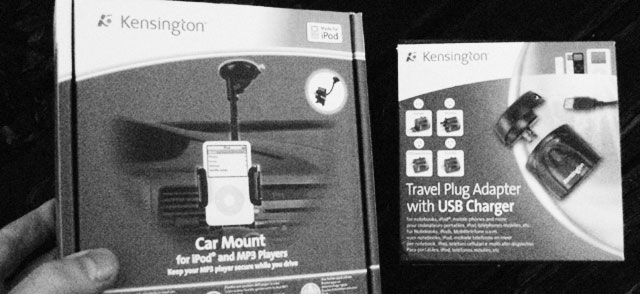
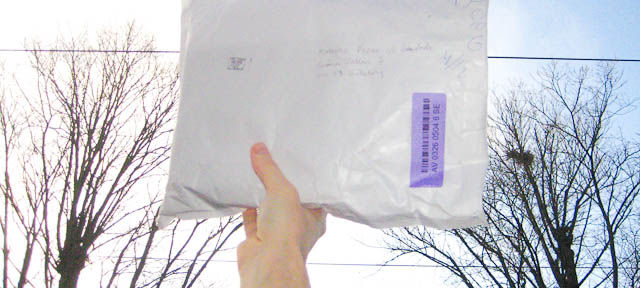
So about 100 competition later, an anonymous package arrived and I still don’t know what competition generated it. No accompanying letter explaining why I’m getting an iPhone charger and mount. The charger is actually rather nifty, with adapters for the whole world built into one rattling piece of plastic. The mount is of more use to someone with an actual window to affix it to, not to mention an iPod to put into it, so Jan got it for early Christmas and I kept the charger as an incentive to travel. Also, the cellphone which I disparaged about a while back arrived, with no dead fish in the package!

All is fine and well and then This American Life chimes in:

When a new Chick-Fil-A sandwich shop opens, people line up 24 hours in advance to be one of the hundred people to get a free year’s worth of chicken sandwiches. [Link to show here: In the middle of the night]

[audio:https://monocultured.com/blog/wp-content/uploads/2009/12/TAL_395_middle_of_the_night.mp3|titles=This American Life 395 – in the middle of the night|Artist=This American Life]

kensington_vinst

IMG_0791

The forum of blienvinnare.com has close to 19’000 members, and the pages are full of hints and pointers for how to compete, what company has put on the best competition, how to deal with cheaters — apparently it’s common practice to take all coupons from a store to hinder others, which is bad sport — and how to complain to the organizing body in case the competition isn’t fair or has some other fault.

Some people take this shit seriously indeed, and in comparison I’m a lightweight, a dilettante dillettante amongst people who’ve made slogan-writing into a noble pursuit which can land you one years supply of cheese. If you’re inclined to read Swedish, check out the post listing what people won during the Christmas calendar competitions and perhaps you’ll see the temptation. Or weep for humanity, whichever.

Terrorism in action. The first day is OK.

action calm cold darkness energy environment lights out post-civilization terrorism

I say, the power of bloggery is intense! No sooner had the previous post gone up than someone took action and pulled the power to my whole neighbourhood. Microwaves, computers, fridges, lights, everything went silent and I was left fumbling for a lighter (sometimes smokers are better of) and candles.

For all twenty minutes while my circles were broken, I relaxed and made some tea, surrendered to the liberating feeling that I actually didn’t have to do anything. And then the power came back on, of course, and I’m now at the computer writing about it and photoshopping the images I took.

grona_vallen_i_morker

If this whole terrorism bit is to bear fruit, I hope whoever pulls off these kind of attacks has a long term strategy, or at least an idea of one, as to what would happen if the whole city would be without power for a week. I’m pretty certain that I’d like “hot water” at some point before Christmas, and would go to tire-burning lengths to acquire it.

Hey kids, let’s consider terrorism!

climate change eco-sabotage enviromentalism kyoto accord terrorism theory way forward

What with the climate summit in Copenhagen bringing back memories of my own trips to large meetings of important people, I’ve been thinking over the merits of action, and more particularly, the benefits of terrorism.

If we know with n% certainty that an 1°C rise in temperature would cause huge changes to our environment — causing human misery along with extinction of biotopes and what have you — and we are equally certain that it’s our own carbon emissions that are the main culprit behind the rise, there seems to be little room to wiggle out of actaully doing something. I don’t follow everyday politics, so very little noise has reached me about what action is being taken to remedy global warming, but let’s assume that it’s “not enough,” shall we?

So even thought there are humans who are affected now — or will likely be affected in the future — by changes in the temperature and subsequent changes in their living conditions, these changes are all mediated through the planet, and blame is easy to shift. When 6.5 billion people are shitting in the same river, it’s hard to tell whose corn you got stuck between your teeth.

mateusz_3D_biograf

Wakaba_studio_detalj

Maybe it would be simpler to see the environment as something with class interests but with no representation?

I’m depressingly convinced that positive change usually comes about only if there’s a threat of a popular uprising or other such change of power distribution. Power is never given, only taken by force — implied or otherwise. This force doesn’t have to be violent as such, but holding vigils and giving out flowers is what happens after the actual fight; It’s not that which initiates the struggle but that which kisses and makes up.

So what is a concerned citizen with a global pathos to do? Where can your limited energy and time be spent and still have an effect? Might I suggest that terrorism offers most bang for your buck? “Terrorism” is just another word for “non-governmental” after all, so besides having to carry the burden of proof you could have the moral high ground; Especially in the eyes of a hopefully grateful posterity.

But whom to terrorise, using what means and for what particular ends? No-one likes vehicles which run on petrol, but hydrogen cars aren’t much better, and who’s going to deliver the food to the store, not to mention drive me to the airport when I’m going on vacation and hey look I pooped in the river again!

Ought you to follow in the footsteps of ELF or Earth First! by burning urban sprawl or logging machinery, spiking and/or climbing trees? The slogan “No compromise in defence of Mother Earth” is alluring but doesn’t make much of a plan. The Unabomber had a plan, albeit a haphazard one, but I don’t know if he brought about any positive change; Does anyone remember much except that scraggly beard?

Perhaps we just ought to think more spectacularly: bigger, better, badder, boom; Chaïm Nissim gave the following reason for firing five rockets at a nuclear powerplant:

These terrorist attacks were part of a movement and each little piece has its importance. People fired rockets, myself for instance. We had found a bazooka by German terrorists and we fired it. We failed, as the closest rocket missed the important part that we targeted by one metre. It was nevertheless quite beautiful. And, symbolically, it was a token contribution to the larger movement. Via Wikipedia

As Chaïm writes, such spectacular action is mostly symbolic (except the actual damage to property, if you’re inclined to take offence at that) but might have a positive long term debate — setting the stage for diplomacy — but make it spectacular enough and the backlash will be awesome.

Wakaba_studio_profil

Humanity is treating this impending environmental doom as a fait accompli and our own future is suffering the Genovese syndrome. I don’t know what would entice me to stick my neck out even though I know it might be the right thing to do, so I can’t for the life of me come up with a plan of action here. Tell me, good people, what ten buildings or industries or people or symbols do we attack — with what force — to what good purpose? What would you be willing to do, to what cost to yourself or others? Do we puncture the tires of cars or give people bikes? Is knocking out powerplants a way forward or forcefully installing micro wind turbines better? Burn buildings to reduce sprawl or occupy land by force and start a new land distribution reform?

Reporting the hand that gives you cellphones to the proper authorities.

animal rights but it's so shiny! choices choices competition goldfish hypocrite

Samsung, or their ad agency rather, threw a competition where you call a number of a phone to make it vibrate off of a plexiglas platform, onto concrete or into a tank with goldfish. The phones are of the rugged kind, so the competition killed two birds with one stone, providing both a neat online interactive experiment, as well as making the proof of the phones ruggedness conditional of winning it.

Naturally, I reported them to the animal rights people, as well as contacting Samsung directly. Had those fish instead been kittens — or if the phones literally were aimed for the previously mentioned birds — you wouldn’t have had to argue much before getting the animals removed from a stressful sitiation, but seeing as it’s much harder to sympathise with fish, it took a call from the department of agriculture for the fish to be removed.

I think it’s awesome that there are enough resources, and laws to direct said resources, to care even for the rights of really boring creatures. Having said that, I realise those fish might have been flushed down the crapper.

[flv:https://monocultured.com/blog/blog_video/Samsungshakedown.flv https://monocultured.com/blog/blog_video/Samsungshakedown.jpg 640 360]

The other part of the story is concerned with the cellphone marked “00” in the video above — barely missing the tank — which is the one I won by ringing frantically, shouting excitedly in front of my computer. I’m only half expecting a dead fish in the mail. I’m sure there is a moral to be learned here, and perhaps there’s even a suitable biblical parable, but I think Petter put it best using the ancient art of rhetorical questioning:

“You won a cellphone and reported them using your own name? You did not win a cellphone.”

Required reading, doing, being: Everyware.

archigram cities drawing gilette reading sci-fi shaving tutorial writing

We are now a predominantly urban species, with over 50% of humanity living in a city. The overwhelming majority of these are not old post-industrial world cities such as London or New York, but large chaotic sprawls of the industrialising world such as the “maximum cities” of Mumbai or Guangzhou. Here the infrastructures are layered, ad-hoc, adaptive and personal – people there really are walking architecture, as Archigram said.

→ Future Metro, Matt Jones: The city is a battlesuit for surviving the future

Lalvani is anxious that his work not be portrayed as the development of trendy shapes; this is an entire system for generating infinitely variable form. Like Fuller before him, he cleaves to the idea that when science begins to mimic nature at a molecular level, it moves into a realm outside of fashion.

→ Core.form.ula, Peter Hall: Bending the Rules of Structure originally published in Metropolis 2004

In everyware, the garment, the room and the street become sites of processing and mediation. Household objects from shower stalls to coffee pots are reimagined as places where facts about the world can be gathered, considered, and acted upon. And all the familiar rituals of daily life, things as fundamental as the way we wake up in the morning, get to work, or shop for our groceries, are remade as an intricate dance of information about ourselves, the state of the external world, and the options available to us at any given moment.

→ Adam Greenfield: Introduction to Everware

If you wanted an allegorical portrait of modern western capitalist society, you could do a lot worse than a man alone at a shaving mirror, intent on his own reflection, while from the other side of the glass a vast global corporation is watching, recording and planning what to sell him next.

→ Guardian.co.uk, Thomas Jones: Cutting Edge

upsidedown_drawing

Yes, yours may not look exactly like the original, but it’s recognizable as a copy, right? What this exercise illustrates is a different kind of seeing. As you were drawing, you weren’t thinking about drawing the nose exactly right, because you may have not known it was a nose.

→ Kirk Bjorndahl: Learn how to draw

Filled fountain pens should always be stored nib up, as they would be in a shirt pocket. You should never store a fountain pen nib down…Gravity works. Filled fountain pens should never be stored for an extended period of time. When you fill a pen, consider it a commitment to use it.

→ Bertrams inkwell: How to care for your fountain pen

So, you’ve emailed 162 job coaches. Now what?

ams arbetsförmedlingen coaching emailing jobbcoach limping

If you plan on emailing more than a handful of people and ask for simple information, don’t include your phone number. I’ll tell you of how I learned this: The webpage listing all eligible job coaches is a pile of shit, impossible to search in any other way other than alphabetical, so I spent twenty minutes collecting all the email addresses and an evening setting up a bulk emailer to send the same email to each of the 162 addresses on my list: 1) Have they any experience working with freelance artists, and 2) Do they know the business end of the modern artworld?

To a certain degree, coaching is more about helping you find the answers to your questions and making sure that you ask the right questions, but I’d like to have the help of someone who might know something of the process for applying for grants, where to look for shows, and so on. An ideal would be a cross between a therapist and an agent, but I’ll take what can I find.

I’ve got some seventy replies, many of them using so many exclamation points you wouldn’t believe, and I’ve found a few who don’t seem completely off the mark or insane. Reading the answers, I realise that I ought to have been more specific in my email, explaining a bit more about what I’m doing — In Swedish, “art” can imply both modern art as well as crafts, and is tangental to culture in general, leaving me with a lot of emails about how they “love to knit and be creative, so let’s arrange a meeting, yes?”

Since this coaching business is a buyers market, with many newly started companies vying for government money, I should have known better than to include my phone number with the email. It’s part of my standard signature and I didn’t think anything of it until my phone started ringing early next morning, not letting up until two days later.

11_meddelanden_bla-1

Svart_svan_svv-1

As most people know who know me, I’m bad at pickup up the phone. Most often this is because it’s on silent and I’m wearing headphones, but when I suddenly had ten people calling me before lunch I realised what it might be about. So I started screening every call, letting all strange numbers go to voicemail. Some of them sneaky bastards tried calling right back using the *31# prefix — showing up as number unknown on my phone — which I guess should give them a star in the margin for ambition. None of those who called answered yes to my questions, but were quick to point out that coaching isn’t about knowing the market but rather helping you out defining goals and guiding you to the tools necessary to reach them.

Which is all fine and dandy, but given a choice I’d go with someone who might have an inkling of why I’m fucking my grant applications up, and who doesn’t clog my phone up when a simple email with a “no, but x” would suffice. Also, I’m bloody awful over the phone and too weak to say no to persuasive people; Had I not dumped it all to voicemail I would probably be in a group session right now, telling the others what precious flower I am, practising on my networking smile. (Prejudiced? Me?)

I’ve recorded all the messages from my answering machine, but they’re not fun enough to present here and I don’t know what to do with them yet. Suggestion go in the drop box (where I notice there’s a lack of comments regarding hair cut mentioned previously. You need to get with that people, or my hair is gonna get got.)

Also, it would seem that I have a hip bursitis, which sounds sexier than it is. I can walk or stand for about half an hour before the slimebag in my hip gives out and hurts like a sonofabitch. I limp about like Warren Ellis only with much less gravitas. I make faces and scare children, but it hardly cheers me up at all…

[The] Sound [It makes] as you move across the room is important. Also: Hair.

ambient anarchist economics fundamentalism grow up haircut style WFMU

Adam Lisagor, better known as lonelysandwich in the podcast You Look Nice Today, has started a new fashion blog with Jessy Thorn of Sound of Young America, and it seems to be designed with me as it’s target audience. It’s called Put This On: A web series about dressing like a grownup, and it doesn’t focus as much on trends as just general hints on how to approach clothes if you want to pass as an adult. Since I’m going through some sort of sneakers & synthetic pants phase at the moment, I think it might be time for me to move to something a bit more snappy. I don’t know if “adult” is what I’d call it, but anything that would make me look more serious is in the right direction. I already have the dour face going for me, now I’d need some attire to go with it.

Also, hair! I’m going to get my hair cut next week and this time I don’t want to say “oh, just make it spiffy” so I’d like som advice on style. Please suggest haircuts which would suit me. If no-one posts anything I’m going with “asymmetric punk” and where do you think that will get me? Smoking crack on the tram, that’s where.

Nakna_grenar_bla_himmel

During the diving course this past summer we got the Garrett Hardins The Tragedy of the Commons to read and ponder. This years Nobel laurate of economy, Elinor Ostrom, won the prize partially because of work she did that contradicted the “tragedy” part of Hardins theory. She’s interviewed over at Planet Money and gives a brief introduction to her research. It’s odd that it’s taken until now for market economists to realise that there might be other forces at work than “rational free agents” or that such agents always constitute the lowest — and most flexible — denominator in economic systems. Has anarchism really gone so out of fashion that no-one reads Kropotkins theories on mutual aid anymore?

If you fancy listening to something interesting today, perhaps to brighten yet another day at the office, you could do much worse than to check out what Steven Stein has done: He took a crapload of preachers and put together an hour of ambient fundamentalism. It’s lordtacular! Go listen here: DJ Steinski Presents: Southern Preachers On The Radio. Via WFMU

The professional dilettante.

coaching free agent job teaching wage slave work

As much as there is talk about the “death of the professional” and the “century of the amateur” I’d like to propose a new title, which just happens to fit with how I’ve been making a living lately: Professional dilettante.

This would require a slight change of how the word originally was used, with less emphasis on being an interested amateur, and more on someone who does a little bit of everything. I guess there’s already the term “jack of all trades” but it just doesn’t look good on a business card. The skillset of people has changed so rapidly that there’s now a great deal of people like I, who are qualified enough to do professional work without doing it full time. You never become technically great at something, but you’re great enough to get interesting work.

wakabas_kompis_pa_kellys

Olle_skor_1

The trick is not to identify yourself too much with your profession, or rather to be able to switch between roles quickly, not like a chameleon afraid of being caught but rather like a Barbapapa; Equally comfortable as a harp as a car. The past two weeks have been a bit extreme, but let’s list what I’ve done that people have paid me for:

Taught advanced digital photography at ArtCollage
Technical support at a doctoral disputation at HFF
Host & bouncer at fashion show
Updating a homepage for the Museum of Architecture
Substituting at three other photographic courses at ArtCollage
Buying equipment and recording sound for the Art Faculty at the University of Gothenburg

And at one point I drove three drunk guys downtown for money cause I had nothing better to do. It’s truly the Niko Bellic approach to employment, with the difference that I don’t kill anyone (Except that once, and that was an exception!) and generally I’m not paid by italians.

I’ve registered with the unemployment office in the hopes of getting something out of the agency. Elections are coming up next year which usually means that the ruling party is throwing money at the unemployment problem hoping that the statistics will improve enough to get them re-elected. So if you’re looking for seed money to start your own company, or need some on-site-experience you stand an OK chance of getting it right now.

One of the projects that the government has started is the employment of “job coaches” who are supposed to go over your CV, job applications and personal hygiene, and generally try to improve your chances of finding employment. Just this year the government has set aside 1.1 billion SEK for this project, hoping to get 27’500 jobs out of it. This translates roughtly into 40’000 SEK per job created.

Anna_ogon_svartvita

Olle_skor_2

As a result of all of this money laying about, hundreds of coaching companies have sprung up overnight. It’s a buyers market where each person who qualifies for a job coach (which is anyone registered with the unemployment office) can choose which coach is right for them, and the coaches get some 9’500 SEK per person they coach, with an additional bonus of 1’500 SEK if that person finds a job for at least one month.

It would seem that the numbers are unbased in any reality except someones wishful thinking. The coaching companies have very little merit to go on, so the prospective clients are left sifting through hundreds of web pages, trying to gleam from the often bombastic presentations which company, and which individual in each company, might be right for them. And the project also seems to assume that 27’500 jobs are waiting to be filled by people who just can’t seem to layout their CV correctly, or who write so abhorrent job applications that they are disqualified from positions they would otherwise be perfectly suited for.

The matter isn’t helped by the miserable way the unemployment office is listing the companies offering coaching services. At the moment there are 150 companies listed alphabetically, ten per page, with no information about them except a link which might or might not be a pdf-file, which might or might not work. You can limit your search geographically, but not according to competence (if you’re an economist, you don’t need coaching by someone who knows only agriculture) or any other metrics (how long they’ve been in business, have they been reviewed somewhere, etc.) so you’re left with hours of work trying to understand what the fuck some of these companies actually do – They are throwing so many positive and cheery superlatives around on their homepages it would seem that you will climb the career ladder propelled on a rainbow coming out your anus, on top of which you will find fulfillment and joy just by being touched by them in a very special way, should you just have the good judgement of picking their company.

Once this whole coaching thing will be eveluated, to see where the 2.9 billion went, I’m guessing that at least 2’000 of those “27’500 annual jobs” are going to be filled with “job coaching.” In a twisted way I guess it makes sense; Paying people to dig a hole and pay others to fill it in.

petter_mas_himmel

Olle_skor_3

I’m not above taking advantage of other people taking advantage of tax money, so I went to this job coaching fair which is in town. A 100 or so companies are cramming the halls with stalls and tables full of photocopied mission statements and slogans. The first thing that struck me was the similarity of the coaching business and the SEO business; If you think about it, the comparison actually is rather fitting. The SEO’s are telling you that regardless of who you are or what your product is, it’s all about presentation, and by adding a few key phrases here, getting some link exchanges there and “going viral” you’ll be raking the dough in in no time at all. Douchebaggery and selfgratulatory bullshit, in other words. And going by what some of these coaching companies are writing on their homepage, the rhetoric sounds similar.

Anyway. I walk down this hall and there seems to be a 2:1 ratio of coach to job applicant, and they look so hungrily at me that I pull out my cell phone and listen intently to voice mail. There’s a presentation going on entitled “Networking your way to a job!” and for every exclamation point or smily face I stumble across I whimper and curl in on myself. The halls are narrow and just walking from one room to the next you can’t help but to rub up against promotional material, which acts on the coaches much like the spasming of a fly in the net alerts a spider of dinner. Don’t look anyone in the eyes and don’t stop, or they’ll get you.

I’m chalking my trip to the fair down to experience, and will make a second attempt tomorrow morning. After all it would be a good idea to brush my cover letter up a bit, and I would like to discuss with someone about whether or not to include my Twitter posts with every application — especially those where I call people names.