Author: Mateusz

Fabbing: Been there, done that, made a copy of the copy.

ant colony architecture Art building burrowing copy fabbing food human animal printing theory

I’m putting together a project description of a workshop I’d like to run. The people I’ve pitched to are enthusiastic, but putting the course into academic-speak is difficult. It’s about 3D printing and other rapid manufacturing technologies, so I’m trying to get my bearings on the state of the art.

I don’t know how I missed the Rhizome article on the subject, Means of Production: Fabbing and Digital Art, as it’s a good primer on how radpid manufacturing is used in modern art. To sum it up: There isn’t much happening and what is happening is mostly concerned with sculptural works.

(Then again, there are trials with printing living cells, so your kids might soon be able to not only pull the legs off spiders, but design and manufacture better legs as replacement…)

Fabbaloo links to a 2001 presentation by Marshall Burns and James Howison which pretty well sums up what I tried to express in the pirate ebay post, when it comes to how our relationship to the object might change:

As in other cases where revenues are in doubt, designers and manufacturers will have to ask themselves what business they are in. In other words, what is it that people will pay them for, what will be their value proposition? Clearly, it will become harder to get paid for the physical arrangement of atoms in a product because that will be too easy for fabbers to make. Even the creative content (“intellectual property”) of a design fades in monetary value because it is too easily duplicated. Link
But now I do have to stop. I simply must. I must put away the Red Bull cans, and stop clicking and typing. I have to stop, so I can print my bed. I have to print my bed, so that I can lie in it.

→ IconEye, Bruce Sterling: The hypersurface of this decade (Via Fabbaloo)

Cornucopia is a concept design for a personal food factory that brings the versatility of the digital world to the realm of cooking. In essence, it is a three dimensional printer for food, which works by storing, precisely mixing, depositing and cooking layers of ingredients.

→ MIT, Fluid Interfaces Group: Cornucopia, Digital gastronomy (Via Shapeways)

On the moon, a research station is being constructed by robots.On top of a gantry, in place of the usual lifting hoist, an automatic arm extends downwards over the station. At the end of this arm, a nozzle squirts a concrete-like material onto the half-built walls like a mechanical hand icing an implausibly large cake. At the same time, computer-controlled trowels shape and smooth the concrete so that it’s flush with the wall below. The whole assembly moves back and forth to build up internal and external walls in layers. Further robotic arms are positioning services inside the building and lifting lintels onto the walls in order to make the roof. In just 24 hours, the house will be complete.

→ Craft, Lee Hasler: A giant leap for a brickie (pdf)
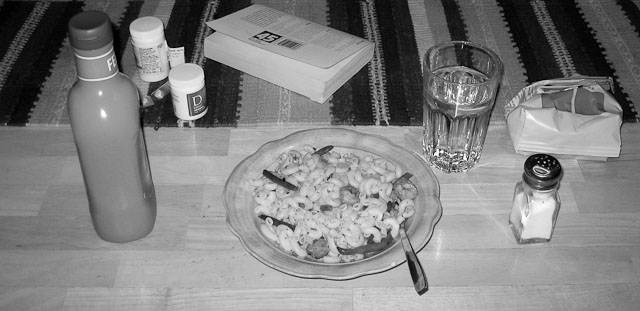
For some reason I start thinking about the space gel ant colony, where the hapless ants are allowed to burrow in 3D space, and out of a solid material create space. When diving last summer the thought struck me that we lack a model of envisioning architecture as a three dimensional space — not strange since we can’t fly, nor swim through the air — except maybe for the astronauts in space, for whom “up” is an arbitrary concept. (Or the IDF soldiers in Gaza, as BLDGBLOG pointed out recently)

Lets assume that 1) we’re extracting space out of matter, not building spaces, but extruding them out of something; destroying material. 2) And into this shapely void which we have made, we introduce objects that we desire – and we don’t build them, or assemble them, but rather extrude them. Need a table? Extrude it. Need somewhere to place the table? Extrude it.

Human will as a metaphor of a factory; Of a digging, burrowing animal, constantly crawling through strata, leaving tunnels behind, filled with the debris of time, want and need, manifested in ABS plastic.

Change begins with you and your cellphone.

alarm annoying Art cellphone iphone loop mp3 phone sara

Ring signals intended for cellphones capable of using mp3-files; Submit yourself and your surroundings to what I present to you here. Download, load up and get down, with the following sound:

Download all of the sounds in one, handy, 1.5 MB file: Ring signals 2 (Previously)

How would you like it?

[audio:https://monocultured.com/blog/wp-content/uploads/2010/01/How_would_you_like_it.mp3]

You shine… (hearing voices remix)

[audio:https://monocultured.com/blog/wp-content/uploads/2010/01/You_shine_multiple.mp3]

Pscha — guide to Polish pronounciation.

[audio:https://monocultured.com/blog/wp-content/uploads/2010/01/Pscha.mp3]

Vocabulary extension: Abash.

[audio:https://monocultured.com/blog/wp-content/uploads/2010/01/Abash.mp3]

P.M means after lunch.

[audio:https://monocultured.com/blog/wp-content/uploads/2010/01/PM_means.mp3]

20 second attack and fade.

[audio:https://monocultured.com/blog/wp-content/uploads/2010/01/20_sec_attack.mp3]

The work of art in the age of mechanical reproduction, part 4

animation art theory originality reproduction walter benjamin writing

Welcome back to the fourth installment of “How to write like Walter Benjamin,” where you are invited to learn how to write art theory — with a little effort on your part, you’ll be writing in no-time!

This tutorial, which clocks in at around one hour, contains chapter 2 of the essay, and since it’s a bit long you might want to take a break half-way through, or at least warm up your hand to minimize cramping.

We’re using the 1935 essay “The work of art in the age of mechanical reproduction,” as translated by Andy Blunden. (UCLA translation, on Wikipedia)

Some people have asked if they have to use the same setup as I when writing, and the answer is in one word “no.” You can write by hand on paper or on a computer, and you are welcome to type as well — the point is to teach you how to write art theory, not to do it in a particular way.

The work of art in the age of mechanical reproduction, part 3

animation art theory originality reproduction walter benjamin writing

This is the third episode of the tutorial in which you’ll learn how to write like art theoretician Walter Benjamin. With just under an hour a week you will be able to write proper art theory in no-time. For this series, we’re using the 1935 essay “The work of art in the age of mechanical reproduction,” as translated by Andy Blunden.

Having previously written the introductory quote and the preface, we can finally start on the essay proper and its first chapter. Enjoy!

On the gentle art of Winning.

bli en vinnare! cell phone competion procrastination this americal life waste of time winning

For a whole month, a while back, I started my day by filling out every online-competition I could find. Using sites like Bli en vinnare [Become a winner] I’d suck their RSS dry, answering inane questions and coming up with slogans for crap I don’t really need. As a kid I used to do the same thing, and there’s something completist about filling out forms online.

Just like personality evaluations, IQ or EQ test, aptitude or Myers-Briggs analysis, there’s something rewarding with the feeling that this anonymous internet form cares about me. Also, there’s a bonus in that you’ll learn to rhyme on cue, incorporating brand names or explanations of why this shade of lipstick would make you feel glorious! It’s all about the gratification of winning — regardless of what the price might be — so in that regard it’s similar to kleptomania or any ADD condition; A completist competetive disorder.

IMG_0790

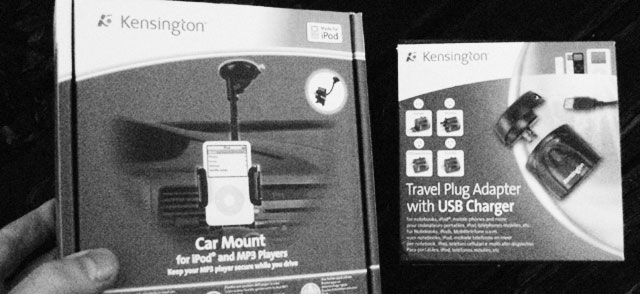
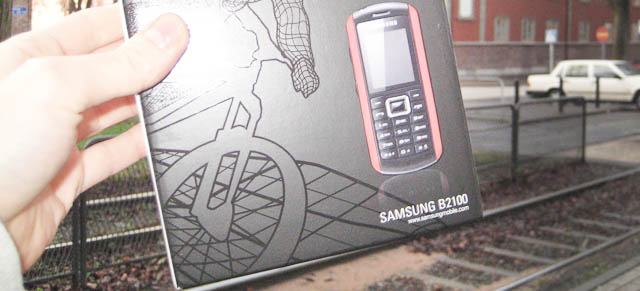
So about 100 competition later, an anonymous package arrived and I still don’t know what competition generated it. No accompanying letter explaining why I’m getting an iPhone charger and mount. The charger is actually rather nifty, with adapters for the whole world built into one rattling piece of plastic. The mount is of more use to someone with an actual window to affix it to, not to mention an iPod to put into it, so Jan got it for early Christmas and I kept the charger as an incentive to travel. Also, the cellphone which I disparaged about a while back arrived, with no dead fish in the package!

All is fine and well and then This American Life chimes in:

When a new Chick-Fil-A sandwich shop opens, people line up 24 hours in advance to be one of the hundred people to get a free year’s worth of chicken sandwiches. [Link to show here: In the middle of the night]

[audio:https://monocultured.com/blog/wp-content/uploads/2009/12/TAL_395_middle_of_the_night.mp3|titles=This American Life 395 – in the middle of the night|Artist=This American Life]

kensington_vinst

IMG_0791

The forum of blienvinnare.com has close to 19’000 members, and the pages are full of hints and pointers for how to compete, what company has put on the best competition, how to deal with cheaters — apparently it’s common practice to take all coupons from a store to hinder others, which is bad sport — and how to complain to the organizing body in case the competition isn’t fair or has some other fault.

Some people take this shit seriously indeed, and in comparison I’m a lightweight, a dilettante dillettante amongst people who’ve made slogan-writing into a noble pursuit which can land you one years supply of cheese. If you’re inclined to read Swedish, check out the post listing what people won during the Christmas calendar competitions and perhaps you’ll see the temptation. Or weep for humanity, whichever.

Terrorism in action. The first day is OK.

action calm cold darkness energy environment lights out post-civilization terrorism

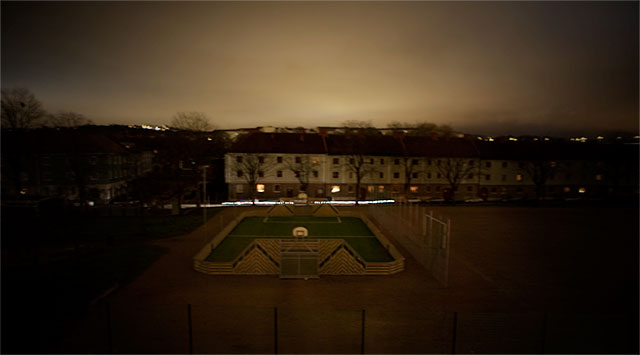
I say, the power of bloggery is intense! No sooner had the previous post gone up than someone took action and pulled the power to my whole neighbourhood. Microwaves, computers, fridges, lights, everything went silent and I was left fumbling for a lighter (sometimes smokers are better of) and candles.

For all twenty minutes while my circles were broken, I relaxed and made some tea, surrendered to the liberating feeling that I actually didn’t have to do anything. And then the power came back on, of course, and I’m now at the computer writing about it and photoshopping the images I took.

grona_vallen_i_morker

If this whole terrorism bit is to bear fruit, I hope whoever pulls off these kind of attacks has a long term strategy, or at least an idea of one, as to what would happen if the whole city would be without power for a week. I’m pretty certain that I’d like “hot water” at some point before Christmas, and would go to tire-burning lengths to acquire it.

Hey kids, let’s consider terrorism!

climate change eco-sabotage enviromentalism kyoto accord terrorism theory way forward

What with the climate summit in Copenhagen bringing back memories of my own trips to large meetings of important people, I’ve been thinking over the merits of action, and more particularly, the benefits of terrorism.

If we know with n% certainty that an 1°C rise in temperature would cause huge changes to our environment — causing human misery along with extinction of biotopes and what have you — and we are equally certain that it’s our own carbon emissions that are the main culprit behind the rise, there seems to be little room to wiggle out of actaully doing something. I don’t follow everyday politics, so very little noise has reached me about what action is being taken to remedy global warming, but let’s assume that it’s “not enough,” shall we?

So even thought there are humans who are affected now — or will likely be affected in the future — by changes in the temperature and subsequent changes in their living conditions, these changes are all mediated through the planet, and blame is easy to shift. When 6.5 billion people are shitting in the same river, it’s hard to tell whose corn you got stuck between your teeth.

mateusz_3D_biograf

Wakaba_studio_detalj

Maybe it would be simpler to see the environment as something with class interests but with no representation?

I’m depressingly convinced that positive change usually comes about only if there’s a threat of a popular uprising or other such change of power distribution. Power is never given, only taken by force — implied or otherwise. This force doesn’t have to be violent as such, but holding vigils and giving out flowers is what happens after the actual fight; It’s not that which initiates the struggle but that which kisses and makes up.

So what is a concerned citizen with a global pathos to do? Where can your limited energy and time be spent and still have an effect? Might I suggest that terrorism offers most bang for your buck? “Terrorism” is just another word for “non-governmental” after all, so besides having to carry the burden of proof you could have the moral high ground; Especially in the eyes of a hopefully grateful posterity.

But whom to terrorise, using what means and for what particular ends? No-one likes vehicles which run on petrol, but hydrogen cars aren’t much better, and who’s going to deliver the food to the store, not to mention drive me to the airport when I’m going on vacation and hey look I pooped in the river again!

Ought you to follow in the footsteps of ELF or Earth First! by burning urban sprawl or logging machinery, spiking and/or climbing trees? The slogan “No compromise in defence of Mother Earth” is alluring but doesn’t make much of a plan. The Unabomber had a plan, albeit a haphazard one, but I don’t know if he brought about any positive change; Does anyone remember much except that scraggly beard?

Perhaps we just ought to think more spectacularly: bigger, better, badder, boom; Chaïm Nissim gave the following reason for firing five rockets at a nuclear powerplant:

These terrorist attacks were part of a movement and each little piece has its importance. People fired rockets, myself for instance. We had found a bazooka by German terrorists and we fired it. We failed, as the closest rocket missed the important part that we targeted by one metre. It was nevertheless quite beautiful. And, symbolically, it was a token contribution to the larger movement. Via Wikipedia

As Chaïm writes, such spectacular action is mostly symbolic (except the actual damage to property, if you’re inclined to take offence at that) but might have a positive long term debate — setting the stage for diplomacy — but make it spectacular enough and the backlash will be awesome.

Wakaba_studio_profil

Humanity is treating this impending environmental doom as a fait accompli and our own future is suffering the Genovese syndrome. I don’t know what would entice me to stick my neck out even though I know it might be the right thing to do, so I can’t for the life of me come up with a plan of action here. Tell me, good people, what ten buildings or industries or people or symbols do we attack — with what force — to what good purpose? What would you be willing to do, to what cost to yourself or others? Do we puncture the tires of cars or give people bikes? Is knocking out powerplants a way forward or forcefully installing micro wind turbines better? Burn buildings to reduce sprawl or occupy land by force and start a new land distribution reform?

The work of art in the age of mechanical reproduction, part 2.

animation art theory originality reproduction walter benjamin writing

The goal of these video tutorials is to help those who otherwise struggle with writing theoretical texts, enabling anyone to learn to write like Walter Benjamin, and more specifically to write his 1936 essay “The work of art in the age of mechanical reproduction” which is a good starting point if one intends to write theory.

In this part, we’ll be writing the preface to essay, using the UCLA translation of the original German work. If you are serious about learning this skill I’d recommend that you’d download the English or German version and follow along. Learning by doing, as it were.


Pardon the clicking and hissing towards the end of the video — My computer threw a hissy fit when it had to open a new document, and this somehow affected only the audio.

And he spake onto them: Readeth this!

Art drawings maffia products thumbsucking Video virtual

In Grand Theft Auto, no misbehavior is so grievous that it can’t be washed away after a quick trip to the police station or the hospital. That conceit works well for gameplay, but it hinders the narrative by suggesting a world in which even the gravest actions have no meaning. How could we buy Lady Macbeth’s “Out, damn’d spot! Out, I say!” if she could have just headed to the nearest Pay’n’Spray?

→ Escapist magazine, Brendan Main: Fall of the house Bellic

We’re pleased to announce a new addition to our shop, in the shape of If Drawings Were photographs – the first ever zine published by It’s Nice That. The brainchild of designer Rob Matthews and Illustrator Tom Edwards, put simply – “Tom gave drawings to Rob and Rob tried to make them into photographs.”

→ It’s Nice That, Alex: If drawings were photographs Via Wakaba

Avatar Machine is a wearable system which replicates the aesthetics and visuals of third person gaming, allowing the user to view themselves as a virtual character in real space via a head mounted interface. The system potentially allows for a diminished sense of social responsibility, and could lead the user to demonstrate behaviors normally reserved for the gaming environment. Via Jonas

This product was originally designed to be: Impossible for child to suck the thumb while wearing, Unrestrictive and fun to wear, Extremely difficult for child to remove. The function of the Thumb Guard is to prevent the seal made around the thumb with the child’s lips. Without this seal, there can be no suction, which is the main source of pleasure in sucking the thumb.

→ Amazon.com: Stop Thumb Sucking with Thumb Guard Kit for One Hand