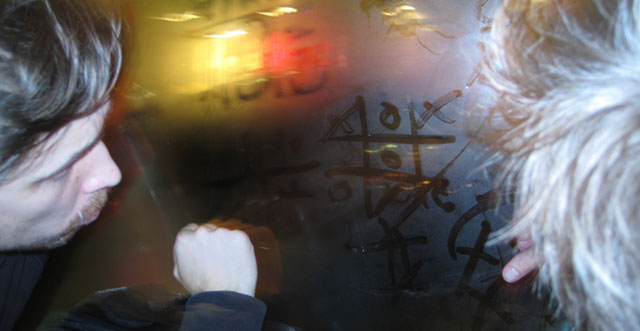
Rocks about to punk ≠ Punks about to rock.

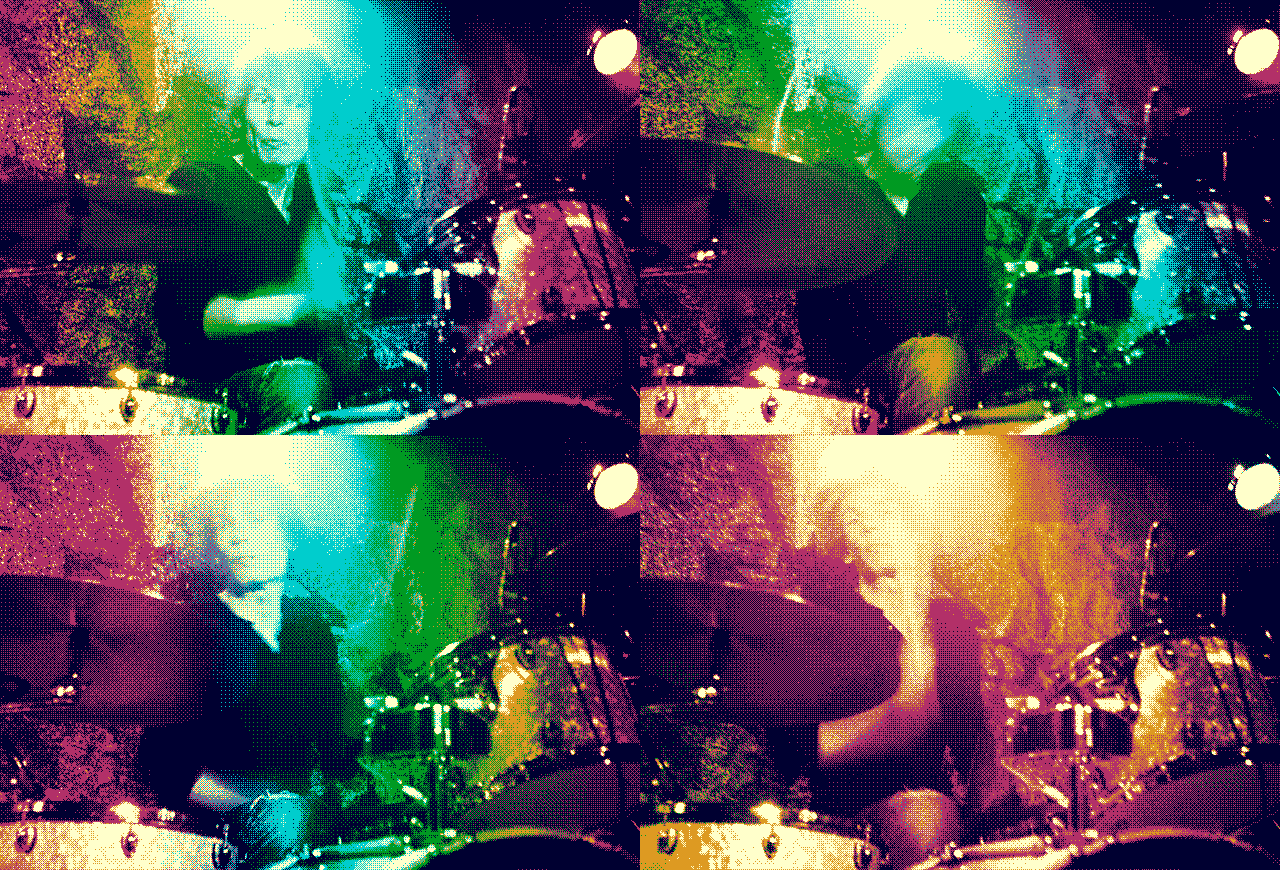
A friend of a friend saw me run around with a camera the other day and asked if I wouldn’t take some pictures of him and his band as they were playing at Henriksberg yesterday. So in skinny jeans and with a leg pouch I climbed all over a small stage, trying to take pictures of The Bang. Usually only my mom asks me to play photographer — “and please don’t make them ‘arty,’ just make them good” — and I’m always nervous whenever I’m supposed to perform. It’s like peeing in public; I’m not a professional enough urinator to be comfortable doing it.

Reviewing the pictured I guess they’re good enough, especially when beaten into submission in post, but it’s so odd looking back at myself and not really remembering what it was I wanted to accomplish with the live shoot. Either you’re documenting live because 1) the light and set and so on are unique enough to warrant taking advantage of the situation, or 2) because you want to document the audience somehow, put the band there and then, bearing witness.

What with every other person in the audience watching the show through viewfinders or cellphone screens, I’d like to see some more effort put into making even concerts like this media friendly. Perhaps a live Bluetooth dump linked to a screen at the bar? Lighting that goes from almost pitch black to living-room, allowing the full range from fanboy to ironic girl to get their desired image. You know, like fenced hunting; The hippo might have nowhere to run, but you’ll still feel rather good about shooting it just so. (As long as you bring ear guards.)

On a side note, I might be coming down with a fever and should go to bed now. Let’s start Monday on a really shiny happy note, shall we? Try not throwing an epileptic fit looking at Jon the drummer above.

The work of art in the age of mechanical reproduction. Part 8

Part eight of the series “Write like Walter Benjamin” where you’ll learn how to write art theory with the help of Benjamins essay “The work of art in the age of mechanical reproduction,” using Andy Blundens translation. For some reason I always misspeak Andys surname as “Bloomden” and I apologise for that. Sooner or later I’ll get it right.

Today, we’ll work through chapter six, which is a short one. If you’ve followed this course from the beginning (as I keep insisting that you do) you should be getting the hang of writing art theory by now, and I hope you are excited about it.

The work of art in the age of mechanical reproduction. Part 7

We’re now more than one third through the essay, and — if you’ve been diligent — you’re one third ready to write art theory! If you’ve followed the previous episodes — and I encourage you to check those out if you haven’t — you know that we’re at chapter five of the Andy Blunden translation of Benjamins classic essay. I hope you enjoy it!

The work of art in the age of mechanical reproduction. Part 6

Here’s part six of my tutorial “How to write like Walter Benjamin” for your consideration. If you haven’t done the previous ones, I recommend you to do so before starting on this.

As usual, we’re using the 1936 essay “The work of art in the age of mechanical reproduction” by Walter Benjamin, translated by Andy Blunden.

The future! The future!

The Singularity is no longer talked about as the geek rapture which will make people happy and good and content with life; Just as our capacity for rational and creative thought will be multiplied hundredfold in a short time, our capacity to act according to our own morals increases accordingly. No longer a world where anyone can build an atom bomb, but one in which each of us is a walking one. The will to power will out, and just because there’s no need to fight over oil or water doesn’t mean someone won’t want to kill us all.

Ray Kurzweils movie Trancendent Man seems like an interesting overview of the mans ideas, and h+ has an interview with him which you might want to read before the movie makes it onto the torrent sites; He is good at articulating the problems which might appear as a result of technological advances (eternal life, nano-tech, AI) and because of his technological background actually has numbers he can throw at you when it comes to the hard sci-fi predictions.

James Hughes over at Changesurfer Radio interviewed professor of philosphy Asher Seidel about his book, and it’s a good guide to the kinds of questions that might challenge our successors. I started listening to the transhumanist Changesurfer Radio ten years ago in Karlstad, and it’s a great source of interesting ideas and people. I heartily recommend it, if for no other reason than that James is a politically conscious person who doesn’t let his interviewees get away with just technological solutions to human problems; Humans are social and political beasts and use technology accordingly. Which, incidentally, also is the lesson that good science fiction can teach us.

bokrelease_suddigt_folk

Lately, between fattening myself on crisps and ramen, and watching The No. 1 Ladies Detective Agency, I’ve been reading. Since none of you heathens got me an ebook reader for the holidays, I’ve been perched in my comfy new fake leather armchair, reading off the screen or on paper.

Mostly I’ve been rekindling old flames: Iain M. Banks Matter as well as the abridged Transition; Peter F Hamiltons Starflyer books — Pandora’s Star and Judas Unchained — have sent me back to the first two parts of the Dreaming Void trilogy, and I can hardly wait for the last installment which is due out in fall of 2010, and where I’m guessing we’re going to see a fascist universe be created in the Void.

Matter is a Culture novel and as such it’s a fascinating read. More than in other novels there is intervention by the Culture — a futuristic, egalitarian galactic society which tries to nudge more primitive civilizations along —  into the life and society of a Victorian era feudal world which exists on a shell world; a spherical world within a world within a world, built for unknown purposes. The king is murdered and his daughter, who has gone off and joined the Culture, returns for his funeral, getting mixed up in a world she’d left behind. If you enjoy Iains style of prose, you’ll love this book — its imagery is powerful and the language just the right amount of funny.

Petter gave me Foreskins Lament by Shalom Auslander — known from This American Life as the Jew who hates God — and it’s a good read so far. If you need a reason for why religion might be more damaging to your mental health than a regular abusive home, look no further than to his description of how he was taught about God. Apatheism is the way to go, people. Trust me on this — just focus on an existential issue other than theism, and make that issue the cornerstone of your personal ontology and moral conviction.

I still haven’t slogged through 45 by Bill Drummond, a collection of essays which Olle lent me, but I’m getting there, although that has been delayed by my adorable mom, who just sent me a Polish account of two years spent in Tokyo. It being mom I have to prioritize that, even though it reads like a punny Lost in Translation. Never an endorsement.

The work of art in the age of mechanical reproduction, part 5

Welcome to the fifth installment of How to write like Walter Benjamin, a series of videos which encourages you to learn how to write art theory. With just a minimum effort you will be writing art theory in no time! We’re using the 1935 essay “The work of art in the age of mechanical reproduction,” as translated by Andy Blunden. Here’s a link: Marxists.org

The run-time of this part is 40 minutes, and we cover all of chapter three. So sit down, grab a pen and paper, and follow along! As usual, if you have any questions, feel free to post them here or over at Vimeo. In case you’ve missed the previous episodes, please check those out before starting on this one.

In defence of humanity.

Their arms were then hit with a stick. If they gave off a hard, hollow ring, the freezing process was complete. Separately, naked men and women were subjected to freezing temperatures and then defrosted to study the effects of rotting and gangrene on the flesh.

→ Daily Mail, Christopher Hudson: Doctors of Depravity

But Yuasa, who practiced medicine until he was 84, has been active to this day in exposing some of the darkest secrets of the Imperial army. He is propelled by a sense of guilt, as well as the fear that Japan is on a path toward committing the same mistakes again.

→ Japan Times, Jun Hongo: Vivisectionist recalls his day of reckoning

Remember those in prison as if you were their fellow prisoners, and those who are mistreated as if you yourselves were suffering.

→ H-I-M Jail & Prison Ministry: Hebrews 13:3

Robots can take the soldiers’ places, he said. They can continuously keep watch on an area, and if nefarious activity is spotted, “We can take appropriate action. … We can kill those bastards before they plant the IEDs,” he added. That includes mounting a weapon on the robot, he said.

→ National Defense, Stew Magnuson: Failure to field the right robots costs lives

Why are humans so fascinated by robots? Where is the UK’s most innovative robotics research taking place? And how does the biology of the natural world inform robot design and engineering? In this video interview, Noel Sharkey, professor of robotics and AI at the University of Sheffield, discusses developments in robotics – from the proliferation of robots in Japan’s automotive industry to the stair-climbing dexterity of Honda’s Asimo robot and beyond.

→ Silicon, Artificial Intelligence: Noel Sharkey on the inexorable rise of robots (Via Slashdot)

Rather than guiding a missile to its intended target, Arkin’s robotic guidance system is being designed to reduce the need for humans in harm’s way, “… appropriately designed military robots will be better able to avoid civilian casualties than existing human war fighters and might therefore make future wars more ethical.”

→ H+ Magazine, Surfdaddy Orca: Teaching Robots the Rules of War

The US was paying teenagers “thousands of dollars” to drop infrared tags at the homes of al Qaida suspects so that Predator drones could aim their weapons at them, he added. But often the tags were thrown down randomly, marking out completely innocent civilians for attack.

→ The Telegraph: Military killer robots ‘could endanger civilians’

Researchers at the Ecole Polytechnique Fédérale de Lausanne in Switzerland have found that robots equipped with artificial neural networks and programmed to find “food” eventually learned to conceal their visual signals from other robots to keep the food for themselves.

→ Technology Review, Kristina Grifantini: Robots ‘Evolve’ the Ability to Deceive

Fabbing: Been there, done that, made a copy of the copy.

I’m putting together a project description of a workshop I’d like to run. The people I’ve pitched to are enthusiastic, but putting the course into academic-speak is difficult. It’s about 3D printing and other rapid manufacturing technologies, so I’m trying to get my bearings on the state of the art.

I don’t know how I missed the Rhizome article on the subject, Means of Production: Fabbing and Digital Art, as it’s a good primer on how radpid manufacturing is used in modern art. To sum it up: There isn’t much happening and what is happening is mostly concerned with sculptural works.

(Then again, there are trials with printing living cells, so your kids might soon be able to not only pull the legs off spiders, but design and manufacture better legs as replacement…)

Fabbaloo links to a 2001 presentation by Marshall Burns and James Howison which pretty well sums up what I tried to express in the pirate ebay post, when it comes to how our relationship to the object might change:

As in other cases where revenues are in doubt, designers and manufacturers will have to ask themselves what business they are in. In other words, what is it that people will pay them for, what will be their value proposition? Clearly, it will become harder to get paid for the physical arrangement of atoms in a product because that will be too easy for fabbers to make. Even the creative content (“intellectual property”) of a design fades in monetary value because it is too easily duplicated. Link
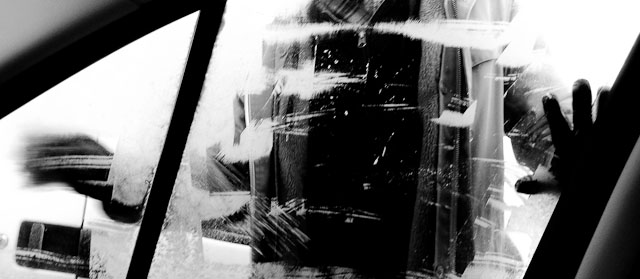
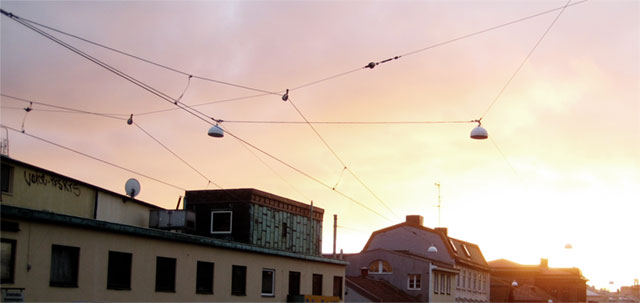
But now I do have to stop. I simply must. I must put away the Red Bull cans, and stop clicking and typing. I have to stop, so I can print my bed. I have to print my bed, so that I can lie in it.

→ IconEye, Bruce Sterling: The hypersurface of this decade (Via Fabbaloo)

Cornucopia is a concept design for a personal food factory that brings the versatility of the digital world to the realm of cooking. In essence, it is a three dimensional printer for food, which works by storing, precisely mixing, depositing and cooking layers of ingredients.

→ MIT, Fluid Interfaces Group: Cornucopia, Digital gastronomy (Via Shapeways)

On the moon, a research station is being constructed by robots.On top of a gantry, in place of the usual lifting hoist, an automatic arm extends downwards over the station. At the end of this arm, a nozzle squirts a concrete-like material onto the half-built walls like a mechanical hand icing an implausibly large cake. At the same time, computer-controlled trowels shape and smooth the concrete so that it’s flush with the wall below. The whole assembly moves back and forth to build up internal and external walls in layers. Further robotic arms are positioning services inside the building and lifting lintels onto the walls in order to make the roof. In just 24 hours, the house will be complete.

→ Craft, Lee Hasler: A giant leap for a brickie (pdf)
For some reason I start thinking about the space gel ant colony, where the hapless ants are allowed to burrow in 3D space, and out of a solid material create space. When diving last summer the thought struck me that we lack a model of envisioning architecture as a three dimensional space — not strange since we can’t fly, nor swim through the air — except maybe for the astronauts in space, for whom “up” is an arbitrary concept. (Or the IDF soldiers in Gaza, as BLDGBLOG pointed out recently)

Lets assume that 1) we’re extracting space out of matter, not building spaces, but extruding them out of something; destroying material. 2) And into this shapely void which we have made, we introduce objects that we desire – and we don’t build them, or assemble them, but rather extrude them. Need a table? Extrude it. Need somewhere to place the table? Extrude it.

Human will as a metaphor of a factory; Of a digging, burrowing animal, constantly crawling through strata, leaving tunnels behind, filled with the debris of time, want and need, manifested in ABS plastic.

Change begins with you and your cellphone.

Ring signals intended for cellphones capable of using mp3-files; Submit yourself and your surroundings to what I present to you here. Download, load up and get down, with the following sound:

Download all of the sounds in one, handy, 1.5 MB file: Ring signals 2 (Previously)

How would you like it?

[audio:https://monocultured.com/blog/wp-content/uploads/2010/01/How_would_you_like_it.mp3]

You shine… (hearing voices remix)

[audio:https://monocultured.com/blog/wp-content/uploads/2010/01/You_shine_multiple.mp3]

Pscha — guide to Polish pronounciation.

[audio:https://monocultured.com/blog/wp-content/uploads/2010/01/Pscha.mp3]

Vocabulary extension: Abash.

[audio:https://monocultured.com/blog/wp-content/uploads/2010/01/Abash.mp3]

P.M means after lunch.

[audio:https://monocultured.com/blog/wp-content/uploads/2010/01/PM_means.mp3]

20 second attack and fade.

[audio:https://monocultured.com/blog/wp-content/uploads/2010/01/20_sec_attack.mp3]

The work of art in the age of mechanical reproduction, part 4

Welcome back to the fourth installment of “How to write like Walter Benjamin,” where you are invited to learn how to write art theory — with a little effort on your part, you’ll be writing in no-time!

This tutorial, which clocks in at around one hour, contains chapter 2 of the essay, and since it’s a bit long you might want to take a break half-way through, or at least warm up your hand to minimize cramping.

We’re using the 1935 essay “The work of art in the age of mechanical reproduction,” as translated by Andy Blunden. (UCLA translation, on Wikipedia)

Some people have asked if they have to use the same setup as I when writing, and the answer is in one word “no.” You can write by hand on paper or on a computer, and you are welcome to type as well — the point is to teach you how to write art theory, not to do it in a particular way.