The work of art in the age of mechanical reproduction, part 2.

The goal of these video tutorials is to help those who otherwise struggle with writing theoretical texts, enabling anyone to learn to write like Walter Benjamin, and more specifically to write his 1936 essay “The work of art in the age of mechanical reproduction” which is a good starting point if one intends to write theory.

In this part, we’ll be writing the preface to essay, using the UCLA translation of the original German work. If you are serious about learning this skill I’d recommend that you’d download the English or German version and follow along. Learning by doing, as it were.


Pardon the clicking and hissing towards the end of the video — My computer threw a hissy fit when it had to open a new document, and this somehow affected only the audio.

Fabbing, contd.

Desktop Factory might be the LaserWriter of additive manufacturing. Priced at under $5000 it’s cheaper than the LaserWriter was, and would allow individuals to buy it for themselves or collectives to scrounge funds together. I would love to play around with it; Barring too high running costs (think of the ink in printers) you could do limited edition runs of stuff.

Maybe the RapMan would be good starting kit for a workshop on building and using 3D printers? I’m actually more interested in building the kits than I am using them, but I guess that the practical applications will reveal themselves once I know what can be done. Or whenever I need a new filterholder for a on-camera-flash or something such.

In the end, I’d probably do what everyone does when confronted with a creative outlet with endless possibilities and print genitalia. But it would be a rapidly prototyped genitalia how cool wouldn’t that be!

The link to Desktop Factory came via Fabbaloo, an excellent fabbing blog with a silly name. Then again, once the 3D printing revolution happens and your ten year old kids will print the latest manga characters, they might very well shout “Faa-baa-loooo!” so perhaps it’s just good brand positioning on their part.

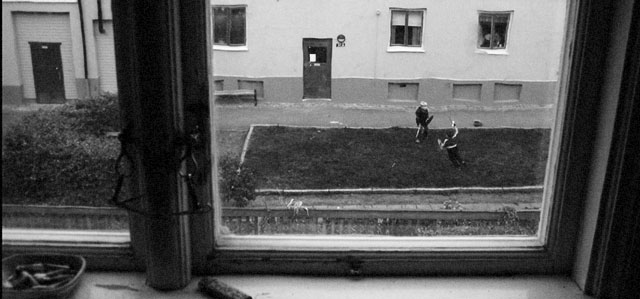
Barn_pa_garden_med_svard

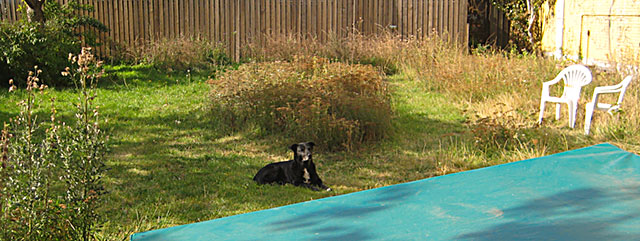
copenhagen_art_fair_hund

Over at blog.ponoko.com there’s a debate in the comments section about how object models will be pirated, and what effects this will have on the designers and manufacturers of stuff. It’s odd how similar the discussion is to the one about music and movie piracy.

Morals don’t always dictate if we pirate or don’t, but rather convenience. What is considered ethical will be adjusted to the technological lowest common denominator, just as will the job market. It’s not a fair way of going about it, but I don’t know how designers of stuff will make a living in a post-fab world, nor how they can hope to stem the tide of obsolescence. Sitting back with some popcorn and watch the slowly dawning realisation on the faces of panicked designers might become the new spectator sport.

Fabb it all and let the added value sort the back end, maybe? This approach hasn’t prevailed among the more litigious media companies, nor curbed their enthusiasm of that business model. I don’t see the future of fabbing to be any different.

In Neal Stephensons book The Diamond Age nano-manufacturing is a reality. People use matter compilers (MC) to make food or clothes or anything else that they might need or want. (Similar to the cornucopia machines of Charles Stross Singularity Sky, the acronym of which is CM, curiously enough) As long as they have the blueprints for something, they can build it. As long as you have access to a feed line you can use it to make stuff. (This is part of what fabbing might offer, even though we’re far off from nano-assembly)

In the book there’s talk of the seed, a concept where you’ll have self-contained seeds that can grow into whatever you’d like. The difference being that their energy stores are self-contained and wouldn’t have to rely on a centrally controlled feed, much like a seed draws upon the earth and surrounding nutrients when growing. One variation on this theme is presented on by Sascha Pohflepp in the work Growth Assembly, a series of drawings reminiscent of the Codex Seraphinianus but with real-world application instead of high fantasy.

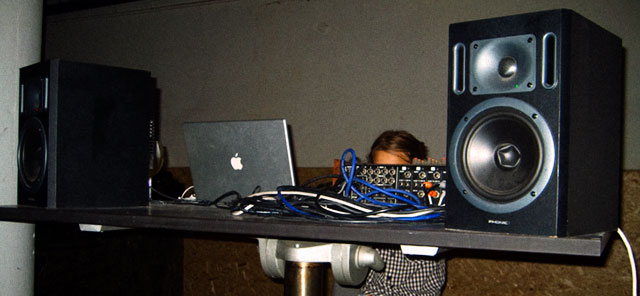
eskil_pallazzo_dj

As for fabbing in art, I still haven’t found much worth mentioning. I might be looking in all the wrong places though.

Peter Jansen did a sculpture series, Strange Attractors, using 3D printing to create molds which are then cast in bronze. the shapes themselves are created using the Chaoscope software, which itself is used to generate representations of strange attractors (something I’m wholly unqualified to tell you anything about except that it’s related to chaos theory) examples of which you can see in their gallery. They make for pretty pictures, and to someone who understands the math involved I’m sure there’s an theoretically beautiful part that is unknowable to the rest of us, but it’s just not very interesting. Casting them in bronze doesn’t add much conceptual value to them, neat though it might be.

A better beginning would perhaps be Peters Human Motion series, but I’m not certain if they’re fabbed or traditionally sculpted and cast. As a comment of a technology on its relationship to space and previous art — Nude Descending and Muybridges studies of motion — it might be an interesting statement of intent. But halting there, making the object itself the work of art, would be dull. As it stands I don’t even know if the motion series was fabbed, but one would hope that there will be more to the tech than mere convenience for sculptors. Not that I begrudge them that, mind.

The link to Peter Jansen came via Metafilter: Human Motions

Professional dilettante: The Photoshop proletariat.

Petter had too much work last week and brought me in for some photoshopping. Confident that whatever retouching was required I would be up to it I set about poking at the material. How hard can it be, right?

Emerging four days later, having slept at his place with scant time for food or personal hygiene, I had much more respect for people who do this for a living. I’ve used Photoshop since 1995, but never worked with it full time and so have huge gaps in my knowledge of how to streamline the work. And apparently my instincts regarding geometry, colour, sharpness and common sense are lacking as well.

At one point, when phone was ringing every fifteen minutes to check on my progress, I could taste zinc in the back of my mouth. For more than one hour I was in an adrenalin buzz, laughing hysterically to myself, my hand cramping around the tablet pen and both feet describing an accelerating cadence for the neighbours below.

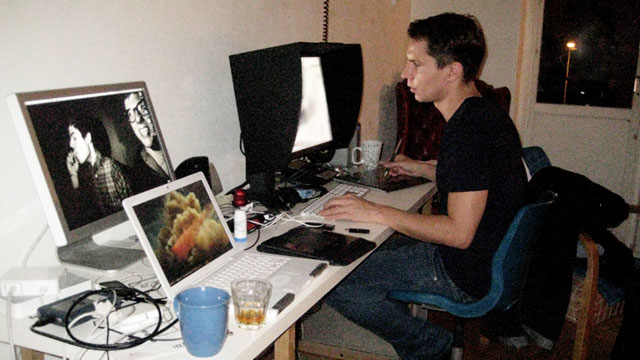
Petter_retuscherar

I’ve been tasked with doing two slideshows for Landstingsarkivet in Stockholm thanks to my work with the Museum of Architecture, and just got the audio for one of them. One is about a home for idiot children from the beginning of the last century; Children who were deemed to be mentally retarded or in need of special education were sent there to either get treatment and rehabilitation or to be taken care of for the rest of their lives in case they were “incurable.”

It makes for a harrowing read, where some of the diagnoses mistook poor vision for retardation, and the slideshow is supposed to tell the story of eleven kids admitted to the home for idiots, victims of circumstance and the (often well–intentioned) application of psychology, sociology and Christian morals.

Sibiria: A show about nothing.

Guro_pallazzot_colour

[audio:Sibiria_2000_A_Show_About_Nothing_128kbps.mp3|titles=Sibiria: A Show About Nothing|artists=Mateusz Pozar]

Ten years ago I studied “Creativity and Innovation” in Karlstad. The extracurricular activities were more interesting than the studies; We got the student radio going and and had some five shows running each week. I had my own hour, Sibiria, which was patterned on the public radio show Frispel, a brilliant experimental weekly run by Fredrik Grundel at P3. Frispel was a freeform show which mixed samples and spoken content with music and effects, and it was original for it’s time. (If anyone has backups of those shows, please let me know. They’re difficult to get your hands on)

Out of the twenty or so shows that I did, I only have backups of two. A show about nothing came about when I didn’t have any ideas about what to do, and just ended up using bits and pieces I’d accumulated: A friend talking about light beer, the kings new years eve speech, computer game samples, and a whole bunch of audio effects. (I think I did it all using SoundEdit 16 with VST plugins which kept crashing)

This show was made almost ten years ago, so the music and aesthetics are a bit dated. Lucky People Center International had just been produced and I might have seen it by the time I ran Sibiria. For what it’s worth it’s a mostly well edited — occasionally slow going — hour of random stuff. If you wish to download a better quality version, right-click on the following link: Sibiria_2000_A_Show_About_Nothing_192kbps.mp3

(Thanks to Arne-Kjell for providing the MiniDisk player required to save the shows from bit rot)

Let’s break things!

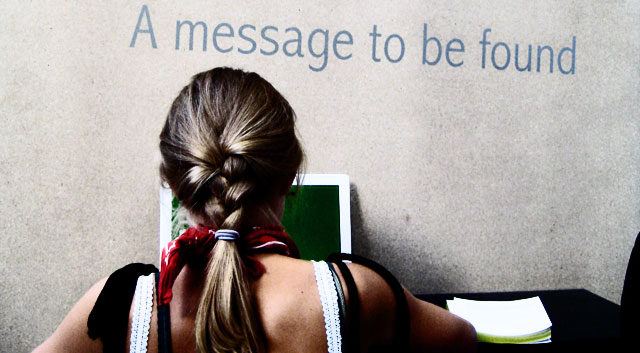
Before deciding on A message to be found me and Olle discussed the point of the project back and forth a couple of times. The postcard idea was something that Olle had had lying about for a while, and we thought it’d fit under the wide ambition of breaking the Internet. Email and other information technologies are instantanious by nature — or at least try to be — so that’s the easiest way of thinking about online communications. If you force a delay, be it random or deterministic, the idea is that you’ll think differently about emailing.

You could make the analogy to how if you stumble across a bus that won’t depart until it’s full, it’ll gives you a different take on how transport can be organised. It’s a tall order when it comes to restructuring how we communicate everyday, especially when the change isn’t necessary or mandated by great outside forces. (E.g. spam filters, central censorship, pay-per-priority-email or exceptionally slow connections.)

Speaking of the big G, a while back I did The Uncontested Order of Things – A Slideshow Curated by Google which I guess falls under the heading of generative art. The point was to see what bias we could deduct from the image search function, in an attempt to discover what we take for granted, or rather what Google takes for granted about us, stuck in loop of confirmation bias. It touches upon the same issues as A message to be found, but from a different angle, since we’re looking at the technologically neutral phenomenon of instantanious communications, rather than a service provided by the dominating company.

Mark_framfor_fonster_serpentin

gamla_soder_papperskorg

I haven’t written much about the trip to Copenhagen, so I thought I’d at least tell you of one of the more interesting pieces there: Relax, I’m just going to fuck with your mind by Stine Kvam. Wearing a helmet with a screen mounted inside of it you saw the world through a camera mounted somewhere in front, and Stine guided you through a few exercises which grew more disconcerting as time went by.

I might have missed part of it because my Danish isn’t what it ought to be, but the whole participatory performance is about the disconnect between what you see through the camera and what you feel and hear inside the helmet. What you see on the screen and what you get to feel with your hands becomes disjointed, and since you no longer can trust your senses you’re forced to trust your untrustworthy guide; She is your only guide here, and at least metaphorically you’re at her mercy.

Once you catch on to what is happening it becomes a riddle. At least I went from “What is happening, and why?” to “What will she try next?” Something is lost in the transition from thoughtprovoking to rebus.

Reminded me slightly of Avatar Machine by Marc Owen where you’re not as much being fooled by someone else but rather messing with your own head, using the learned habits from computer games to change your self image in real time. I wonder how his third person perspective would work on someone who hasn’t played those kinds of games. Here’s another video with the artist, courtesy of Boingboing.net.

Reflections on: Copenhagen & art.

We just got back from the alternative Copenhagen art fair. It’s too early to say if we were a smashing hit, but at least some people got smashed so let’s call that a partial win. It’s not always obvious what you take away from a happening like this. You’re supposed to hobnob and get to know others in your field and get invited to co-operating with galleries and such. Etc. Some of us did get invited to other spaces, and Skup Palet is more corporeal now than it was before, which is a good thing.

Because Skup Palet is such a diverse group I guess we all had different ambitions with our presence. I for one wanted to see what this whole art fair business was about — never been to one more than five minutes — and watch performance art or at least talk to performance artists. As therapy, you understand. There was a flesh-and-blood dadaist doing his thing, which was so quaint it went to bad and back to good again. There is little avant-garde left when nonsense poetry is regarded as something “classic.” Goodiepal did a performance in the shape of a lecture, a form I used for my MA and which Olle thinks is awesome; I found it “cool and stuff.”

We represented with Frustration Canon and A Message To Be Found (the latter a project that Olle and I put together) and visitors and other artists seemed to enjoy both. Both were interactive; The former more ambitious and the other taking the shape of the ubiquitous “laptop with a webpage,” where all the relational aesthetics in the world can’t hide the fact that the my Macbook was incidental to the situation. (Much like a movie on slavery needs a person of colour, any colour.)

alt_cph_bar_sugror_par_finger

Frustration Canon is an idea based on something that I threw together some years ago. Ever since I put that thing up, Anna has urged me to do something more with it, to take it a step further as she puts it. Which sounds like a good idea but I have no inkling of what it implies. To me it was only ever about making a webpage where three people bang their heads on a desk. When I envisage “taking it further” I can only imagine variations on a theme, but not all that much new content. More banging, banging on other surfaces, banging in high definition.

It’s flattering when someone likes ones work, and the art fair was an opportunity to make something more of the idea; Anna and Jan took the original concept and ran with it. Together with Pär, who set up the video playback in PD, they attached a contact microphone underneath a table and invited people to bang their foreheads on the red X, a vinyl sticker taped to the surface. There are other details to the setup, but that’s basically it: Invite people to booth, promise them it won’t hurt too much and put them on the big 42″ screen mounted prominently on a wall.

As it turns out, people are quite happy to hit their heads in exchange for a pin and a smile. I don’t reveal it that often, but when I apply myself I can become an intolerably cheerful fucker. With a manic grin, flattery and a kind of friendliness you wouldn’t believe, I raked clients in one after another, all the while most others of our troop looked like undertakers annoyed with the living, doing little to dispel the image of artists as brooding and difficult.

What made Frustration Canon a good choice of work to show as an introduction to Skup Palet is the overly symbolic gesture of literally “banging ones head in frustration” as it applies both to an artistic “struggle” as to working in a group, with all the inherent difficulties of organisation and egos getting trampled. Ten artists pulling together is more often than not an exercise in futility – it’s like herding cats; Angry, philosophical, drunk, cats. It takes a great deal of work to make teamwork work, and if you take away nothing else from the video then perhaps use it as an illustration of your own life as a member of any given collective. Originally, we had talked about letting the “bang” synchronise once every half hour or so, but that was a bit too complicated to pull off at such short notice.

The version below is a more recent edit, with people from Enrico Pallazzo banging their heads, synched to make a melody. I think Robert might have done the edit, I’m not sure. The look and sound of the piece is different from what we presented in Copenhagen, but the individual framing of the shots are more or less the same. In Copenhagen the videos were shown in a 4×4 grid, randomly appearing and occasionally in a different pitch.

My and Olles work, A message to be found, has the shape of a website service; You write a message and then hide it for as long as you like. It’s a delay of a day, a week or tens of years. You can add an image to your message, and are encouraged to tag what you’ve written. If you write a love letter to your boyfriend, you might tag the message “John Doe, love letter, Bombay 2009, honeymoon” and those keywords would end up somewhere on the generated page. The idea being that the search engines (today that means “the Google”) will index the page based on the keywords in lieu of the content – since the content won’t be visible for another n years. Until the message is revealed you only see a countdown timer.

It’s a message to be found but we don’t know by whom or under what circumstances. In five years time pages might be indexed differently. HTML 4 might only be accessible by legacy browsers when the whole Internet moves into the next iteration of Second Life or Facebook or smell-o-vision. The project is based on Flash which looking back hasn’t been the most search-friendly format, although that might resolve itself with time and more computing power thrown on the ambition of a semantic web.

There are similar services, like Future Me which allows you to delay messages, as well as services that send out notices if you don’t ping their server for a while (the service, assuming that you have died, sends out your missives from beyond the grave) but A message to be found differentiates itself by being a delayed public publication. The distinction is small, but it’s an interesting enough experiment and it’ll be fun to see what indexes will pick up the messages, and what messages have been written. Every once in a while Olle checks in on how many messages have been written, and there’s a small but steady stream of them being entered.

As an aside, Radio Lab recently made en episode where some of the above mentioned services come into play. It’s the After Life episode and you could jump to the end of the show if you want to hear that segment, or listen from the start to an excellent hour of excellence.

Flicka_A_Message_to_be_found_alt_art

Music has a right to abortion.

I ended up honourable mention in the Michael Jackson monument design competition. Do I put that on my CV?

And just a couple of days later Warren Ellis links to an article about anti-cancer nano-tech. If it comes shaped like a glove, my five minutes of Photoshop messed up some scientists’ five year on a pun. Still, I better get royalties.

I’m on the outskirts of Copenhagen right now, where SKUP PALET is participating in the Alt_Cph. The show opens at 1400 and we’re “adding the finishing touches” as it’s called. All is going swimmingly. There’s an assortment of people and I’m looking forward to the opening in a couple of hours. Petúr might show up with his half-clone later which will be interesting. I wonder if the kid skateboards yet.

underwater_seagrass

3D printing. Fabbing. Lockpicking.

Jonas has graciously spent time with us in Gothenburg and just got back to Stockholm, the town north of here. I’ve signed up for a few more dives and am looking forward to that. SKUP PALET, the art organisation that a bunch of us have started, is slowly getting its shit together and it looks like we’re going to represent at an art fair in Copenhagen. I visited Arcam today, the Gotheburg company that produces stuff in titanium that I wrote about in the post on rapid prototyping, and had a chat and a tour of their facilities; I got some insight into how specialised their buisiness model is, with only 50 machines worldwide.

jonas_kuk

As research before my MFA lockpicking presentation I interviewed Marc Weber Tobias. He had forwarded his Skype account to his cellphone and talked to me as he stopped for gas somewhere in a desert. The world felt just as small and awesome as when I was in high school and interviewed NASA for the radio show we were doing. (The feeling being “I can call anyone and ask anything!”) There’s an article on him and his doings over at Wired, which you might enjoy.

→ Wired, Charles Græber: The ultimate lock picker exposes weak military installations, corporate systems

What comes through in the article – beside his drive and intelligence – is the lack of patience with stupidity and a genuine fascination with stuff. It’s a quality that many nerds and other obsessive people share, and I sympathise with it. It’s this fascination that I was trying to gleam at my meeting with Patrik Ohldin at Arcam.

Of course, coming from a sci-fi reading background and with my head full of ideas on the end of stuff that rapid prototyping is hearalding, I felt much as the city kid staring in awe and disbelief at someone milking a cow. Patrik had a much more buisiness minded approach to the technology; He keeps abreast of what is happening in their sector, but the changing human perception of what originality implies in the face of CAD-to-production just isn’t part of their business. Making spare parts for humans and cars is.

It was nice to see what they were up to, and it’s always exiting to learn first hand about hight tech stuff, but now I feel I’d need to complement this excursion with a visit to the lo-fi end of the spectrum. Are there any home-fabbers in Gothenburg? Point them in my direction.

hustopp_moln_svv

petter_motljus_moln

The Pirate eBay and other scenarios.

I’ve been trying to get my head around 3D printing. In the futuristic sense of the word it’s the manufacture of a hot dog complete with relish and mustard. It’s such a transformative technology that I’d like to get in on the game somehow, not only read about it. This is an attempt to put stuff onto paper. Pardon the rambling.

Let’s divide the making of things into five mechanical categories, and see if something useful comes of it: Additive, subtractive, shaping, combining. (Molding might be the fifth, or perhaps it’s of the combination order where the object that is being created is the mold, which combined with steel or what–have–you causes the negative object. Ignore for now.)

The combination of things requires things to combine, the shaping of things requires a material that is malleable besides whatever other qualities you need, the subtractive production (milling, cutting, etc.) need a hunk of material that is bigger than your end result. The additive model allows you to work in multiple materials, at once combining things for whatever function you need them to fill. Today this mostly means a working ball bearing or a surgical knee replacement. This is the technical side of things.
FJARR_AB_conteiner

Some are predicting wholesale piracy, and once the technology becomes cheap enough eBay will surely be flooded by original copies just as The Pirate Bay will be flooded by CAD/CNC program instructions. The joke isn’t lost on anyone that the name of The Pirate Bay will rub off on the auction site once everyone with a RepRap or MakerBot gets up to speed with replicating materials. And why not?

If the remix and DIY approach will hold true for personal fabrication (fabbing) then you’ll be forced to shift gears from “is it what it says it is?” when you relate to objects, to “is it what I want?” Trending and social constructions will still exist because we’re social critters, but they will have to take something else into account (another quality or justification, however arbitrary) and branding of objects might become less relevant.

Michelangelo’s David has been 3D scanned by Stanford and they’re limiting access to the the model, but how long before it’ll be pirated? Once you have an accurate replica next to your garden gnome, does the original matter at all? (If being original is the bees knees, why so afraid of copies? If it’s only a matter of making money by selling the reproduction rights, the losing battle that the music, film and game industries has fought the past ten years is on the doorstep of museums and industrial designers.) Home fabbing is killing IKEA!

We’ll manufacture and use stuff as if it was real but with no sense of “real” left. It’s the post-scarcity of technocrats combined with a corruption of the traditional understanding of materials. It’s a change in volume and sheer numbers, if not in the way we approach things. Material nihilism maybe?

[flv:https://www.monocultured.com/blog/blog_video/Bruce.flv https://www.monocultured.com/blog/blog_video/Bruce.png 640 360]

Above is the latter part of the end keynote that Bruce Sterling gave at the ReBoot conference. [via Warren Ellis] It’s his take on where we’re heading ideologically and how we can find value in life. He does sound like a whiny old fart part of the time, and there’s little love for his audience, but it’s an articulate rant and I’m not one to scoff at someone who thinks about these things for a living.

Sterlings notion that we ought to get a proper bed and a proper chair make sense if what is left of the objects are our use of them and if the value they provide are somehow measurable by us in a non-arbitrary way. (“Being well rested” is a concept we understand. Extend this to more arbitrary objects and you’ll notice that we have few things that actually carry meanining in the sense that an object in and of itself carries meaning.)

Jamais Cascio referenced the speech with specific regard to how Sterlings ideas relate to 3D printing. Cascio draws parallells to what Postscript and LaserWriter did for desktop publishing in the mid 80’s. (Hollow, bold, underline, cursive Chicago, anyone?) The article is The Desktop Manufacturing Revolution and it’s a good overview of the technology and some of it’s implications.
tvattmedel

We should stop saying ‘Is this a good thing or a bad thing?’ and start saying, ‘What’s going on?’. It’s a quote attributed to Marshall McLuhan by Liss Jeffrey and it’s a sensible suggestion.

While teaching future architects at Chalmers I was impressed by their approach to materials and created objects. It is as much a part of their problem as it’s a boon, but they all treated their models as incidental to the process of architecture. The objects didn’t hold any value except what they said of the overall project.

This is in line with how rapid prototyping has been used up to now, and also diametrically opposed to how many artists approach objects. Technically speaking, an artist can’t take a shit without creating an objet d’art, so we tend to guard whatever physical objects we produce. (Piece of art and piece of shit is interchangable in some peoples minds, but even for them it’s the piece that is important.)

But where an architect might view the printed 3D object as a stepping stone to a real object, fabbing offers a rejection of specificity of objects all together – i.e. a knife at your throat bears meaning on your life and well being, but it’s not really important what kind of knife it is. In this hyperbolic example you would do well to ask the McLuhan question: Is the thing at my throat sharp enough to harm me?

I’m being silly and perhaps these ideas don’t apply to all situations, so let’s focus on art and 3D printing. First of all, we’ll have the meta art: “Ooh, you’ve carved a small replica in wood of something that you randomly generated in your 3D printer to make a point about originality. Good for you!” It’s unavoidable and to a certain degree interesting for the debate and theory (I made my Virtual Photography series because I wanted to make a point about virtual worlds and photography) but it’s the next step that will be interesting: The abandon of material sacrament.
audi_hos_jonas

Artist scientists, spefically mathematicians, have experimented with rapid prototyping and sculpture. They are in the odd position of celebrating the pure æsthetics of mathematical shapes and concepts. Carlo H. Séquin is a physicist who has collaborated with artists and sculptors who work with pure form. His article – Rapid prototyping: a 3d visualization tool takes on sculpture and mathematical forms – is the only artistic reference Wikipedia has on 3D printers, and it has very little to do with modern art. The area seems ripe for experimentation.

What I recently wrote about ARGs (Alternative Reality Games) seems applicable to 3D printers. You get an excuse and a means to remake the world in your own imagination or buy into someone elses, literally. Interpretation and allegory – traditionally the priviledge of priests and artists – is now a technological issue, not a metaphysical one: If you can print anything that money can buy you might as well print money. Fake money buying fake things in a fake world; Truly a map on a 1:1 scale if there ever was one.

cyclist_road_tunisia

If it wasn’t for the inertia of societies the end of this process would find us in a copy of Second Life where we’re all pointing at colourful things and going “meh”. As it stands, this process of virtualising maybe isn’t about shifting the way we manufacture and appreciate things, but will help us remove the clutter – take away everything that isn’t interesting and special and super and reveal the social superstructure onto which the objects were fixed; That designer lamp you liked is only a Google Warehouse click away. (Much in line with what Sterling is suggesting, but not because of an appreciation of craftsmanship or purposeful living but because it’s meaningless in a literal sense.)

Besides the artisan or mundane stuff that we for one reason or another love, objects are deconstructed in a way we should recognise, that of Platonic idea and instance. (But here the idea of an idea isn’t a reductionist problem but the foundation for discussion, the new modernity as Nicolas Bourriaud put it in a recent lecture at Valand.) It’s as if the object becomes stretched out in two directions until you have the plastic, wood and metal in one hand, and an idea or social category in the other. Ceci n’est pas une pip and so on.

I might be lacking whatever gene it is that makes some of the bicycle people not as enthusiastic about my boom-bike as I am. I see it as an instance of a bike, an embodiment of features and designs and materials that under other cicumstanced would be a fancy Bianchi. So when I see the titanium rapid prototyping that Arcam offers I imagine that I could recreate my beater as it was built. The object is incidental, what we imbue it with is not.

You could argue that I am a vulgar person with no appreciation for workmanship. And you would be right.