The work of art in the age of mechanical reproduction, part 3

This is the third episode of the tutorial in which you’ll learn how to write like art theoretician Walter Benjamin. With just under an hour a week you will be able to write proper art theory in no-time. For this series, we’re using the 1935 essay “The work of art in the age of mechanical reproduction,” as translated by Andy Blunden.

Having previously written the introductory quote and the preface, we can finally start on the essay proper and its first chapter. Enjoy!

On the gentle art of Winning.

For a whole month, a while back, I started my day by filling out every online-competition I could find. Using sites like Bli en vinnare [Become a winner] I’d suck their RSS dry, answering inane questions and coming up with slogans for crap I don’t really need. As a kid I used to do the same thing, and there’s something completist about filling out forms online.

Just like personality evaluations, IQ or EQ test, aptitude or Myers-Briggs analysis, there’s something rewarding with the feeling that this anonymous internet form cares about me. Also, there’s a bonus in that you’ll learn to rhyme on cue, incorporating brand names or explanations of why this shade of lipstick would make you feel glorious! It’s all about the gratification of winning — regardless of what the price might be — so in that regard it’s similar to kleptomania or any ADD condition; A completist competetive disorder.

IMG_0790

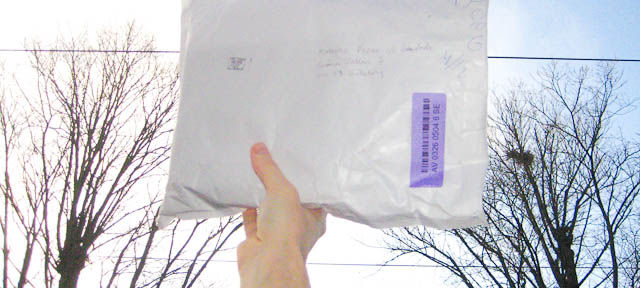
So about 100 competition later, an anonymous package arrived and I still don’t know what competition generated it. No accompanying letter explaining why I’m getting an iPhone charger and mount. The charger is actually rather nifty, with adapters for the whole world built into one rattling piece of plastic. The mount is of more use to someone with an actual window to affix it to, not to mention an iPod to put into it, so Jan got it for early Christmas and I kept the charger as an incentive to travel. Also, the cellphone which I disparaged about a while back arrived, with no dead fish in the package!

All is fine and well and then This American Life chimes in:

When a new Chick-Fil-A sandwich shop opens, people line up 24 hours in advance to be one of the hundred people to get a free year’s worth of chicken sandwiches. [Link to show here: In the middle of the night]

[audio:https://monocultured.com/blog/wp-content/uploads/2009/12/TAL_395_middle_of_the_night.mp3|titles=This American Life 395 – in the middle of the night|Artist=This American Life]

kensington_vinst

IMG_0791

The forum of blienvinnare.com has close to 19’000 members, and the pages are full of hints and pointers for how to compete, what company has put on the best competition, how to deal with cheaters — apparently it’s common practice to take all coupons from a store to hinder others, which is bad sport — and how to complain to the organizing body in case the competition isn’t fair or has some other fault.

Some people take this shit seriously indeed, and in comparison I’m a lightweight, a dilettante dillettante amongst people who’ve made slogan-writing into a noble pursuit which can land you one years supply of cheese. If you’re inclined to read Swedish, check out the post listing what people won during the Christmas calendar competitions and perhaps you’ll see the temptation. Or weep for humanity, whichever.

Terrorism in action. The first day is OK.

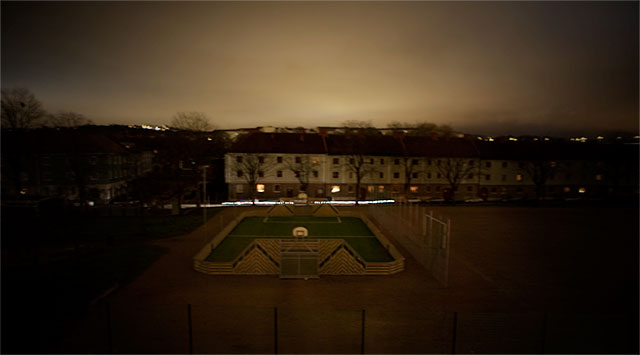
I say, the power of bloggery is intense! No sooner had the previous post gone up than someone took action and pulled the power to my whole neighbourhood. Microwaves, computers, fridges, lights, everything went silent and I was left fumbling for a lighter (sometimes smokers are better of) and candles.

For all twenty minutes while my circles were broken, I relaxed and made some tea, surrendered to the liberating feeling that I actually didn’t have to do anything. And then the power came back on, of course, and I’m now at the computer writing about it and photoshopping the images I took.

grona_vallen_i_morker

If this whole terrorism bit is to bear fruit, I hope whoever pulls off these kind of attacks has a long term strategy, or at least an idea of one, as to what would happen if the whole city would be without power for a week. I’m pretty certain that I’d like “hot water” at some point before Christmas, and would go to tire-burning lengths to acquire it.

Hey kids, let’s consider terrorism!

What with the climate summit in Copenhagen bringing back memories of my own trips to large meetings of important people, I’ve been thinking over the merits of action, and more particularly, the benefits of terrorism.

If we know with n% certainty that an 1°C rise in temperature would cause huge changes to our environment — causing human misery along with extinction of biotopes and what have you — and we are equally certain that it’s our own carbon emissions that are the main culprit behind the rise, there seems to be little room to wiggle out of actaully doing something. I don’t follow everyday politics, so very little noise has reached me about what action is being taken to remedy global warming, but let’s assume that it’s “not enough,” shall we?

So even thought there are humans who are affected now — or will likely be affected in the future — by changes in the temperature and subsequent changes in their living conditions, these changes are all mediated through the planet, and blame is easy to shift. When 6.5 billion people are shitting in the same river, it’s hard to tell whose corn you got stuck between your teeth.
mateusz_3D_biograf

Wakaba_studio_detalj

Maybe it would be simpler to see the environment as something with class interests but with no representation?

I’m depressingly convinced that positive change usually comes about only if there’s a threat of a popular uprising or other such change of power distribution. Power is never given, only taken by force — implied or otherwise. This force doesn’t have to be violent as such, but holding vigils and giving out flowers is what happens after the actual fight; It’s not that which initiates the struggle but that which kisses and makes up.

So what is a concerned citizen with a global pathos to do? Where can your limited energy and time be spent and still have an effect? Might I suggest that terrorism offers most bang for your buck? “Terrorism” is just another word for “non-governmental” after all, so besides having to carry the burden of proof you could have the moral high ground; Especially in the eyes of a hopefully grateful posterity.

But whom to terrorise, using what means and for what particular ends? No-one likes vehicles which run on petrol, but hydrogen cars aren’t much better, and who’s going to deliver the food to the store, not to mention drive me to the airport when I’m going on vacation and hey look I pooped in the river again!

Ought you to follow in the footsteps of ELF or Earth First! by burning urban sprawl or logging machinery, spiking and/or climbing trees? The slogan “No compromise in defence of Mother Earth” is alluring but doesn’t make much of a plan. The Unabomber had a plan, albeit a haphazard one, but I don’t know if he brought about any positive change; Does anyone remember much except that scraggly beard?

Perhaps we just ought to think more spectacularly: bigger, better, badder, boom; Chaïm Nissim gave the following reason for firing five rockets at a nuclear powerplant:

These terrorist attacks were part of a movement and each little piece has its importance. People fired rockets, myself for instance. We had found a bazooka by German terrorists and we fired it. We failed, as the closest rocket missed the important part that we targeted by one metre. It was nevertheless quite beautiful. And, symbolically, it was a token contribution to the larger movement. Via Wikipedia

As Chaïm writes, such spectacular action is mostly symbolic (except the actual damage to property, if you’re inclined to take offence at that) but might have a positive long term debate — setting the stage for diplomacy — but make it spectacular enough and the backlash will be awesome.
Wakaba_studio_profil

Humanity is treating this impending environmental doom as a fait accompli and our own future is suffering the Genovese syndrome. I don’t know what would entice me to stick my neck out even though I know it might be the right thing to do, so I can’t for the life of me come up with a plan of action here. Tell me, good people, what ten buildings or industries or people or symbols do we attack — with what force — to what good purpose? What would you be willing to do, to what cost to yourself or others? Do we puncture the tires of cars or give people bikes? Is knocking out powerplants a way forward or forcefully installing micro wind turbines better? Burn buildings to reduce sprawl or occupy land by force and start a new land distribution reform?

The work of art in the age of mechanical reproduction, part 2.

The goal of these video tutorials is to help those who otherwise struggle with writing theoretical texts, enabling anyone to learn to write like Walter Benjamin, and more specifically to write his 1936 essay “The work of art in the age of mechanical reproduction” which is a good starting point if one intends to write theory.

In this part, we’ll be writing the preface to essay, using the UCLA translation of the original German work. If you are serious about learning this skill I’d recommend that you’d download the English or German version and follow along. Learning by doing, as it were.


Pardon the clicking and hissing towards the end of the video — My computer threw a hissy fit when it had to open a new document, and this somehow affected only the audio.

And he spake onto them: Readeth this!

In Grand Theft Auto, no misbehavior is so grievous that it can’t be washed away after a quick trip to the police station or the hospital. That conceit works well for gameplay, but it hinders the narrative by suggesting a world in which even the gravest actions have no meaning. How could we buy Lady Macbeth’s “Out, damn’d spot! Out, I say!” if she could have just headed to the nearest Pay’n’Spray?

→ Escapist magazine, Brendan Main: Fall of the house Bellic

We’re pleased to announce a new addition to our shop, in the shape of If Drawings Were photographs – the first ever zine published by It’s Nice That. The brainchild of designer Rob Matthews and Illustrator Tom Edwards, put simply – “Tom gave drawings to Rob and Rob tried to make them into photographs.”

→ It’s Nice That, Alex: If drawings were photographs Via Wakaba

Avatar Machine is a wearable system which replicates the aesthetics and visuals of third person gaming, allowing the user to view themselves as a virtual character in real space via a head mounted interface. The system potentially allows for a diminished sense of social responsibility, and could lead the user to demonstrate behaviors normally reserved for the gaming environment. Via Jonas

This product was originally designed to be: Impossible for child to suck the thumb while wearing, Unrestrictive and fun to wear, Extremely difficult for child to remove. The function of the Thumb Guard is to prevent the seal made around the thumb with the child’s lips. Without this seal, there can be no suction, which is the main source of pleasure in sucking the thumb.

→ Amazon.com: Stop Thumb Sucking with Thumb Guard Kit for One Hand

Fabbing, contd.

Desktop Factory might be the LaserWriter of additive manufacturing. Priced at under $5000 it’s cheaper than the LaserWriter was, and would allow individuals to buy it for themselves or collectives to scrounge funds together. I would love to play around with it; Barring too high running costs (think of the ink in printers) you could do limited edition runs of stuff.

Maybe the RapMan would be good starting kit for a workshop on building and using 3D printers? I’m actually more interested in building the kits than I am using them, but I guess that the practical applications will reveal themselves once I know what can be done. Or whenever I need a new filterholder for a on-camera-flash or something such.

In the end, I’d probably do what everyone does when confronted with a creative outlet with endless possibilities and print genitalia. But it would be a rapidly prototyped genitalia how cool wouldn’t that be!

The link to Desktop Factory came via Fabbaloo, an excellent fabbing blog with a silly name. Then again, once the 3D printing revolution happens and your ten year old kids will print the latest manga characters, they might very well shout “Faa-baa-loooo!” so perhaps it’s just good brand positioning on their part.

Barn_pa_garden_med_svard

copenhagen_art_fair_hund

Over at blog.ponoko.com there’s a debate in the comments section about how object models will be pirated, and what effects this will have on the designers and manufacturers of stuff. It’s odd how similar the discussion is to the one about music and movie piracy.

Morals don’t always dictate if we pirate or don’t, but rather convenience. What is considered ethical will be adjusted to the technological lowest common denominator, just as will the job market. It’s not a fair way of going about it, but I don’t know how designers of stuff will make a living in a post-fab world, nor how they can hope to stem the tide of obsolescence. Sitting back with some popcorn and watch the slowly dawning realisation on the faces of panicked designers might become the new spectator sport.

Fabb it all and let the added value sort the back end, maybe? This approach hasn’t prevailed among the more litigious media companies, nor curbed their enthusiasm of that business model. I don’t see the future of fabbing to be any different.

In Neal Stephensons book The Diamond Age nano-manufacturing is a reality. People use matter compilers (MC) to make food or clothes or anything else that they might need or want. (Similar to the cornucopia machines of Charles Stross Singularity Sky, the acronym of which is CM, curiously enough) As long as they have the blueprints for something, they can build it. As long as you have access to a feed line you can use it to make stuff. (This is part of what fabbing might offer, even though we’re far off from nano-assembly)
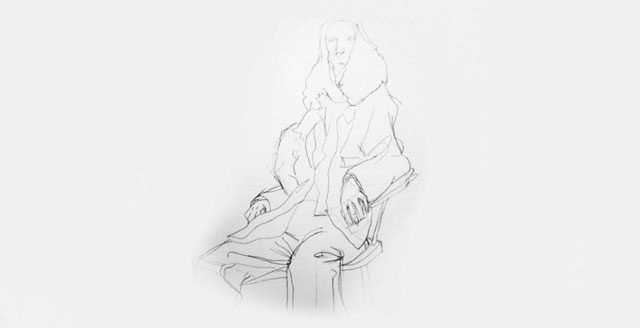
In the book there’s talk of the seed, a concept where you’ll have self-contained seeds that can grow into whatever you’d like. The difference being that their energy stores are self-contained and wouldn’t have to rely on a centrally controlled feed, much like a seed draws upon the earth and surrounding nutrients when growing. One variation on this theme is presented on by Sascha Pohflepp in the work Growth Assembly, a series of drawings reminiscent of the Codex Seraphinianus but with real-world application instead of high fantasy.

eskil_pallazzo_dj

As for fabbing in art, I still haven’t found much worth mentioning. I might be looking in all the wrong places though.

Peter Jansen did a sculpture series, Strange Attractors, using 3D printing to create molds which are then cast in bronze. the shapes themselves are created using the Chaoscope software, which itself is used to generate representations of strange attractors (something I’m wholly unqualified to tell you anything about except that it’s related to chaos theory) examples of which you can see in their gallery. They make for pretty pictures, and to someone who understands the math involved I’m sure there’s an theoretically beautiful part that is unknowable to the rest of us, but it’s just not very interesting. Casting them in bronze doesn’t add much conceptual value to them, neat though it might be.

A better beginning would perhaps be Peters Human Motion series, but I’m not certain if they’re fabbed or traditionally sculpted and cast. As a comment of a technology on its relationship to space and previous art — Nude Descending and Muybridges studies of motion — it might be an interesting statement of intent. But halting there, making the object itself the work of art, would be dull. As it stands I don’t even know if the motion series was fabbed, but one would hope that there will be more to the tech than mere convenience for sculptors. Not that I begrudge them that, mind.

The link to Peter Jansen came via Metafilter: Human Motions

Reporting the hand that gives you cellphones to the proper authorities.

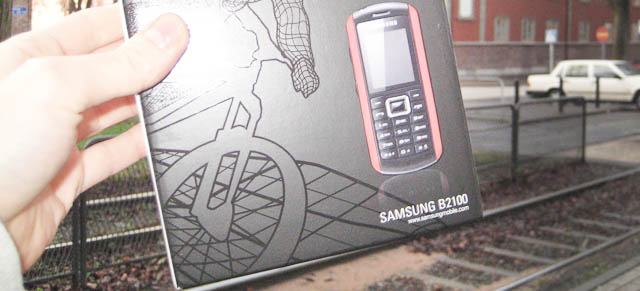
Samsung, or their ad agency rather, threw a competition where you call a number of a phone to make it vibrate off of a plexiglas platform, onto concrete or into a tank with goldfish. The phones are of the rugged kind, so the competition killed two birds with one stone, providing both a neat online interactive experiment, as well as making the proof of the phones ruggedness conditional of winning it.

Naturally, I reported them to the animal rights people, as well as contacting Samsung directly. Had those fish instead been kittens — or if the phones literally were aimed for the previously mentioned birds — you wouldn’t have had to argue much before getting the animals removed from a stressful sitiation, but seeing as it’s much harder to sympathise with fish, it took a call from the department of agriculture for the fish to be removed.

I think it’s awesome that there are enough resources, and laws to direct said resources, to care even for the rights of really boring creatures. Having said that, I realise those fish might have been flushed down the crapper.

[flv:https://monocultured.com/blog/blog_video/Samsungshakedown.flv https://monocultured.com/blog/blog_video/Samsungshakedown.jpg 640 360]

The other part of the story is concerned with the cellphone marked “00” in the video above — barely missing the tank — which is the one I won by ringing frantically, shouting excitedly in front of my computer. I’m only half expecting a dead fish in the mail. I’m sure there is a moral to be learned here, and perhaps there’s even a suitable biblical parable, but I think Petter put it best using the ancient art of rhetorical questioning:

“You won a cellphone and reported them using your own name? You did not win a cellphone.”

Required reading, doing, being: Everyware.

We are now a predominantly urban species, with over 50% of humanity living in a city. The overwhelming majority of these are not old post-industrial world cities such as London or New York, but large chaotic sprawls of the industrialising world such as the “maximum cities” of Mumbai or Guangzhou. Here the infrastructures are layered, ad-hoc, adaptive and personal – people there really are walking architecture, as Archigram said.

→ Future Metro, Matt Jones: The city is a battlesuit for surviving the future

Lalvani is anxious that his work not be portrayed as the development of trendy shapes; this is an entire system for generating infinitely variable form. Like Fuller before him, he cleaves to the idea that when science begins to mimic nature at a molecular level, it moves into a realm outside of fashion.

→ Core.form.ula, Peter Hall: Bending the Rules of Structure originally published in Metropolis 2004

In everyware, the garment, the room and the street become sites of processing and mediation. Household objects from shower stalls to coffee pots are reimagined as places where facts about the world can be gathered, considered, and acted upon. And all the familiar rituals of daily life, things as fundamental as the way we wake up in the morning, get to work, or shop for our groceries, are remade as an intricate dance of information about ourselves, the state of the external world, and the options available to us at any given moment.

→ Adam Greenfield: Introduction to Everware

If you wanted an allegorical portrait of modern western capitalist society, you could do a lot worse than a man alone at a shaving mirror, intent on his own reflection, while from the other side of the glass a vast global corporation is watching, recording and planning what to sell him next.

→ Guardian.co.uk, Thomas Jones: Cutting Edge

upsidedown_drawing

Yes, yours may not look exactly like the original, but it’s recognizable as a copy, right? What this exercise illustrates is a different kind of seeing. As you were drawing, you weren’t thinking about drawing the nose exactly right, because you may have not known it was a nose.

→ Kirk Bjorndahl: Learn how to draw

Filled fountain pens should always be stored nib up, as they would be in a shirt pocket. You should never store a fountain pen nib down…Gravity works. Filled fountain pens should never be stored for an extended period of time. When you fill a pen, consider it a commitment to use it.

→ Bertrams inkwell: How to care for your fountain pen