
Better life through chemistry. Part #344. SNRI & Ricetams – pills for progress

Midjourney: technical blueprint of a living city, style of simon stålhag, playful

The geeky version of crystal healing might be the nootropic stack – mixes of different pills and powders you take to effect cognition & memory. I’m enthusiastic about it since at least in theory there ought to be a bunch of chemicals which can pass the blood-brain barrier and make us more interesting. One established family of chemicals are the Racetams, which some people swear by – so I ordered a sample from Nootropics Depot and have chewed my way through the bottles.

In general, I can sympathise with people who don’t want to take any drugs or medication – be it painkillers or antidepressants or cognitive enhancers – but unless you’re actively feeling worse for taking the stuff, I see little harm in it (on an individual level). I’ve been on and off antidepressants for a bunch of years, and right now I’m on a new (for me) SNRI and can spend my energy on being creative and productive rather than awfully sad, which is a nice change of pace.

Of course, there’s the whole messed up situation we’re in now where doctors are prescribing massive amounts of antidepressants just to keep people functioning enough to keep the economy going, which might be political reason enough to avoid the stuff (similar arguments can be made for vaccines, opiates, blood pressure meds, etc), but on an individual level, if you feel better for taking something, why the hell not. Some notes on Ricetams below.

Coluracetam – 20mg capsule

Day 1: 20mg – Transient headache
Day 2: 40mg – No noticeable effect
Day 3: 60mg – same as above
Day 4: 60mg – same as above
Day 5: 60mg – same as above

Aniracetam – 750mg per capsule – start 2 days after Coluracetem

Day 1: 750mg – Depressed mood
Day 2: 1.5g – No noticeable effect
2 day break
Day 3: 2.25g – No noticeable effect
Day 4: 3g – same as above
Day 5: 3.75g – same as above

Fasoracetam – 20mg per capsule – start 5 days after Aniracetam

Day 1: 20mg – No noticeable effect
Day 2: 40mg – Maybe better mood?
1 day break
Day 3: 80mg – Mood still improved. Slightly better long term recall?
Day 4: 120mg – same as above
Day 5: 60mg – same as above

Pramiracetam – 300mg per capsule – start after a three week bout of Covid-19

Day 1: 300mg – No noticeable effect
Day 2: 900mg – Maybe a bit more focused?
5 day break
Day 3: 900mg – Noticeably more focused and calm
Day 4: 1.2g – same as above
1 day break
Day 5: 1.5g – slightly more focused

Oxiracetam – 750mg per capsule – start 4 days after Pramiracetam

Day 1: 750mg – No noticeable effect
Day 2: 1.5g – No noticeable effect
3 day break
Day 3: 1.5g – No noticeable effect
1 day break
Day 4: 1.5g – Maybe a bit more focused? (Didn’t sleep much, groggy morning)
Day 5: 2.25g – No noticeable effect
3 day break
Day 6: 3g – No noticeable effect

Phenylpiracetam – 100mg per capsule – start 10 days after Oxiracetam

Day 1: 100mg – No noticeable effect
Day 2: 200mg – No noticeable effect
Day 3: 300mg – Sligthly manic / frantic? Might have been too much caffeine
5 day break
Day 4: 200mg – Elevated focus and drive
Day 5: 100mg – Elevated focus

Noopept – 30mg per capsule – start 3 days after Phenylpiracetam

Day 1: 30mg – No noticeable effect
Day 2: 30mg – same as above
Day 3: 60mg – same as above
7 day break
Day 4: 60mg – same as above
Day 5: 90mg – same as above


So, Pramiracetam and Phenylpiracetam might be worth experimenting with a bit more. Unfortunately, Nootropics Depot seems to have discontinued the stuff, so I’ll have to look elsewhere. Also, when I was trying the Ricetams I wasn’t on SNRI’s, and I don’t know how those might interact.

Me be AI one day

When I learned about DALL•E last year it seemed like magic – basically casting spells at a computer and getting images out – and now there’s Midjourney and Stable Diffusion (the latter which I can now run on my M1 laptop) and overnight there’s a whole ecology of secondary AI tools that have popped up. Since most of the interaction with these tools consists of stringing barely coherent word jumbles together – prompting – there’s a market for selling the coolest prompts. And prompters are starting to claim ownership over their particular flavour of letters, and are doing so with no sense of irony considering that the AI models are trained on art trawled off of artists who now see their style mimicked in the service of furry porn and tentacle landscapes.

But I’ve been having a blast! It’s so much fun just sitting and prompting and poking and playing around – it’s a fantastic toy and whoever markets a fast upscale + printing service targeting this is going ot make a mint.

The technology & scene is changing at a breakneck pace, and hanging out in the MidJourney Discord is great, as is the Unstable Diffusion Discord with it’s abundance of digital horror erotica monstrosities being prompted into existence.

MidJourney: Frightening giant rat gauche painting volumetric

So I’m writing this post just to mark a moment in time. There are so many clever things being written about the latest wave of AI that just keeping up feels like a full time job – but Jon Stokes primer below is a good start.

What if I told you that every configuration of bits that can possibly exist — every abstract concept or idea, every work of art, every piece of music, everything we can put into a digital file for display or playback on a computer or in a VR headset — is already out there on the number line and that the act of turning any given chunk of information into a readable file involves first locating that thing in the eternal, pre-existing space of numbers and then reversing enough local entropy to give that number a physical form?

Jon Stokes: AI Content Generation, Part 1: Machine Learning Basics
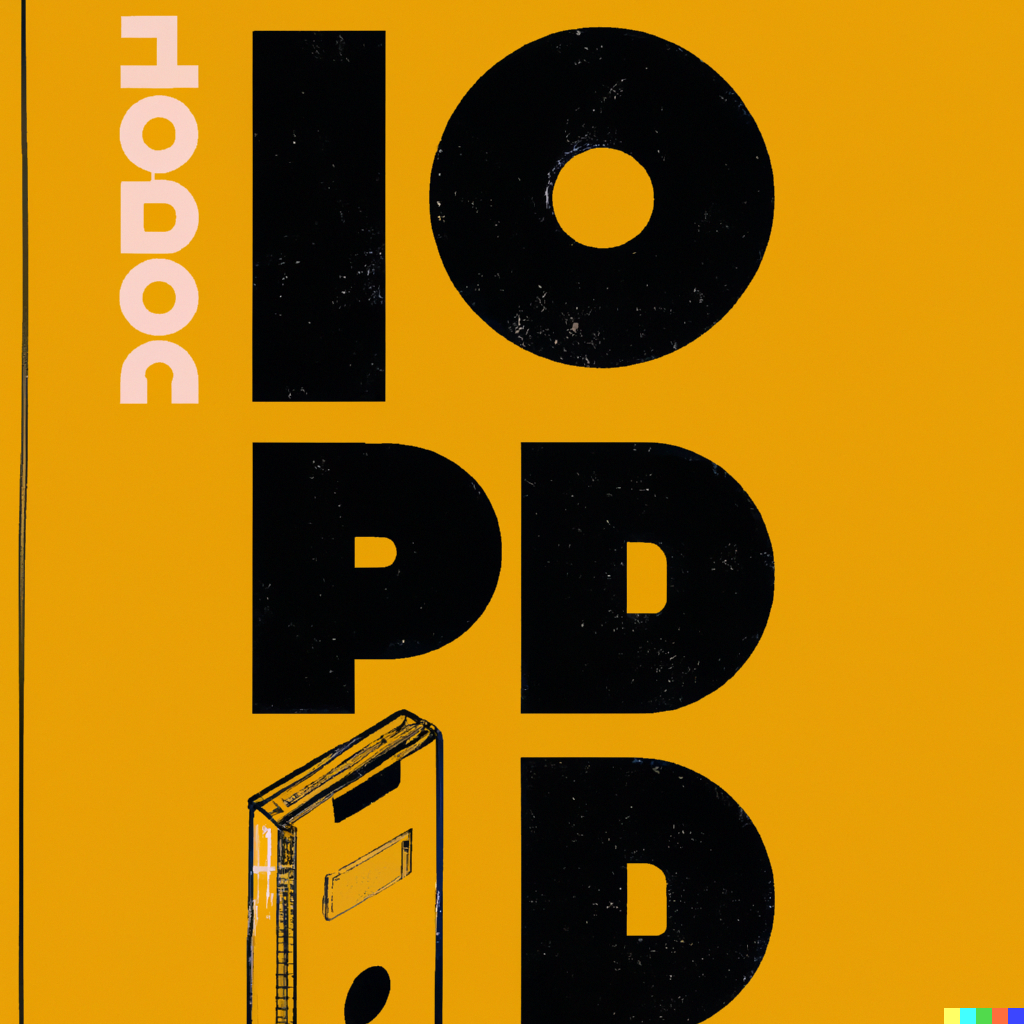
DALL•E: Brutalist graphic poster of iPod

The span of what these models can create is breathtaking – there’s literally no visual expression that they haven’t encountered. As per Jons article, all the images are already out there. Which is equally true of all pencil drawings being encased in every pencil lead, each marble statue in each block, etc, but never have the potential forms been so accessible. Indeed: Expecto Patronum JarJar Wang!

The scale of power

Lifting your eyes from your daily problems, you might see the edifices of human power stuctures outlined among the clouds, so all-encompassing that you don’t reflect on them most of the time. Networks of power, resources, influence and all around, oh my. And cheese:

People receiving meals from prisons, schools, and charities have little control over the ingredients they eat, and low-income individuals are the most likely to be recipients of these meals., In effect, government treats the poor and captive populations as wastebaskets for its excess cheese.

Brown Political Review, Allison Arnold: Let them eat cheese

As the comments on the piece point out, as well as the original mefi thread where I found the article, the author seems to bang a bit hard on the we’re-poisoning-minorities-with-lactose drum. But the image of bunkers full of cheese and cheese-adjacent products, and the political decisions leading up to the situation, is fascinating.

Beneath the good that CCHR has inarguably done, there is plenty of harm. Positioning themselves as reasonable skeptics who are just asking questions, their ulterior motive is to sow seeds of doubt about the whole concept of psychology. Not that the Church of Scientology has a sterling reputation for helping members who are suffering from mental illness itself.

The Baffler, Jess McAllen: The anti-antidepressant syndicate

Scientology is a perenniall boogyman – not without reason mind – and disentangling legitimate critique of mental health practices from the self serving agenda of that cult isn’t easy. McAllen has put together an interesting piece on the subject, and I imagine of the saying “the enemy of my enemy is my friend” which here could be addended with “unless they’re Scientologists cause that makes me look like a nutter as well”.

These gifs come from Giphy, which has been integrated with Instagram for years. They’re lo-res, imperfect, and entirely decontextualized. These disembodied ghosts—ancient in computer years—blink back at me because tech companies know that, based on my age, I like them. And I do like them. I miss where they came from—it’s a place I’ve found is no longer there. […] Still, the visual remnants of vaporwave have long outlasted its radical ideological underpinnings. Almost immediately, its pastel, geometric, softcore aesthetics were gobbled up by media platforms, in particular the image-driven platforms Tumblr and Instagram. The pastiche compositions of Arizona Iced Tea cans and old Windows desktops were very quickly made available on all these commercial interfaces, which were not only feeding on a countercultural art movement—they were likewise consuming the ghosts of an internet they had long since murdered.

The Baffler, Kate Wangler: 404 page not found

I’ve felt the nostalgia of what Internet was supposed to be, and what it partially was, and Kate captures the feeling well. I dislike the online world that we have today and wish someone would strike an unknown underground well which would burst forth with new possibilities to connect, to create and to feel at home. The genre of waporwave had completely passed me by, but it’s late retro futurism is alluring. (As a side-note, Wangler mentions the Consumer Aesthetics Research Institite in that article, and their are.na site is a fantastic resource of design language.)

algorithmic radicalization is presumably a simpler problem to solve than the fact that there are people who deliberately seek out vile content. “These are the three stories—echo chambers, foreign influence campaigns, and radicalizing recommendation algorithms—but, when you look at the literature, they’ve all been overstated.” He thought that these findings were crucial for us to assimilate, if only to help us understand that our problems may lie beyond technocratic tinkering.

The Atlantic, Gideon Lewis-Kraus: How Harmful Is Social Media?

We can’t blame technology alone for the ills of society, and the algos might not be the sole culprit of the curent societal malaise.

The failure of the Peruvian anchovy catch in 1972 led to a significant decline in the availability of high-protein feedstocks and increased demand for soybean meal. As a result, soybean prices soared in 1973 and 1974.

USDA: Agricultural Commodity Price Spikes in the 1970s and 1990s: Valuable Lessons for Today

An overview of two historical price hikes in world agro markets, it’s a fascinating insight into how huge the trade systems are, and how dependent we still are on the good graces of our planet to support us.