Doing the RepRap #1

For the betterment of humanity, or at least the part of it interested in rapid prototyping, I’ll try to document the process of building my RepRap. So far, I have etched a shabby PCB — it’s the Gen7 v1.2 board — and I’ve tested it for shorts. It’s not the prettiest board I’ve seen and I’ll make a backup, but hopefully it’ll survive my cutting and drilling.

I’ve ordered a soldering station, having poured over reviews of different models and asking any person who has ever had a passing acquaintance with anything more advanced than a toaster, and ended up getting the Weller WHS40. I’m picking it up on Monday from ELFA, along with some solder, and will set it all up in the kitchen. Hopefully there won’t be enough fumes to kill any plants and/or people.

The instructions on the RepRap project wiki are confused and make me miserable. Many pages are not maintained properly and often seem to contradict each other. Using a wiki as documentation repository is all well and fine, but it’s not very pedagogical and frustratingly difficult to find even the PCB layout for the boards, as each new design is explained by the people working on it using whatever nomenclature — or lack thereof — they fancy. I don’t expect this process to be easy, but can for the life of me not understand why you would spend thousands of hours developing an awesome project intended to be a disruptive technology, and then fuck up the instructions. I found some excellent assembly tutorials though, which should be of great help once I’m building the actual rig.

I had a horrible time finding ready-to-print PCB layout schemes, so I backtracked the process and am trying out PCB CAD software. I haven’t been mired in learning new software in a while, so this will be interesting. Learning stuff while doing other stuff is a feature not a bug, so this might be an interesting way of learning more about electronics and CAD. As it is, I’m learning all skills necessary for the project on-the-go. I did some soldering in grade school, and I know how not to blow up my multimeter, and that’s about it as for my skillz. If I manage to build this thing — and get it to run — I suspect that most any primate should be able to.
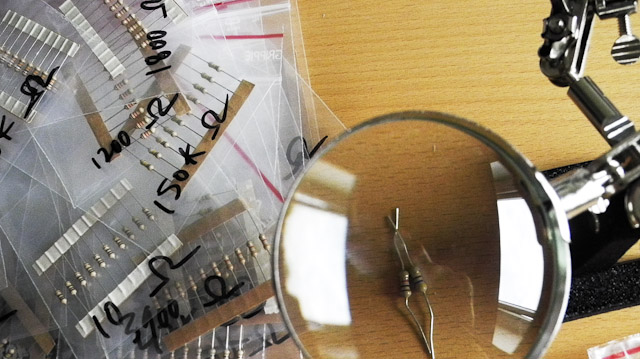
The first PCB software I’m trying out is Eagle from Cadsoft
The build instructions for the Gen7 1.2 board are here: reprap.org/wiki/Motherboard_1_2
Layouts for the PCB are here: github.com/Traumflug and a ready to print PDF in Gen7Board Layout.pdf
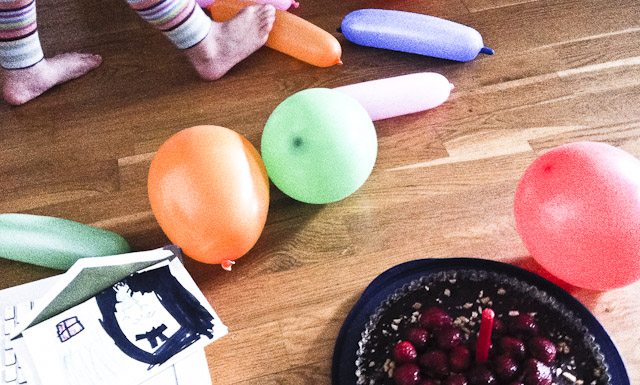

Let us eat cake!

Sara and Tura woke me up this morning with a cake and a song, possibly related to my birthday. You know how it feels being woken up by a five-year old stomping on balloons? Fucking adorable, that’s how. The chocolate cake was excellent and so sweet it’ll cause diabetes in fish downstream of the sewage treatment plant.

For once I wasn’t too stressed out about my birthday, and proceeded to have a nice day with Sara at the demonstration against building high-rises on our allotment gardens (annoying GP TV autostart link) after which we drove Anna and Jan to the airport. They were running a tad bit late, and Jan informed me on the peculiarities of Gula Faran en route, seeing as I’d be driving it back. It’s funny that; In driving school I was never taught that if the outside temperature is higher than 30°C the brakes might not take and not to “rev more than 3500 rpm on fifth or it’ll downshift to fourth. Or maybe third.”

I’m not good with travel-induced stress, having missed important flights and trains and hating myself for it, and I was glad of not being at the other end of Jans phone when people already at the airport were calling and wondering where the hell we were. “We’re there!” is such a patent lie in that situation: If we were, you wouldn’t be having that phone call, now would you? My reaction might hark back to being a kid, waiting for my parents to come home from shopping, looking at the clock and dreading it would pass the time when they said they were going to be back. Not that the fears are the same, but time is a recurring theme, is what I’m getting at.

Back home, with only slightly ominous rattling as accompaniment, we had dinner and I manhandled Saras Nintendo. Super Mario Bros is still fun, although the platformer feels so much more limited than I remember it. The breadth and story I imbued it with as a kid isn’t there, replaced by an eagerness to complete the levels and find speed runs and easter eggs. Compared with how boring it feels on an emulator with keyboard, having the joypads indent my palms is all that is required to want to jump over more blocks. I am now looking for a NES.

Mateusz saved your life, remember?

The site for the lying project is now up and available on www.houseminor.org. You ought to check it out because it’s exactly the kind of thing you’d like! I’ve changed the mission statement a bit from the first post, but the main idea is still the same, as well as the goal: To print a magazine containing no facts whatsoever. I’ll document the progress here on the blog, but www.houseminor.org is the main resource for the project, so look to that.

It’s easy to get ahead of oneself, and even though it feels as if the hard part of the project is behind me, the actual task of collecting, editing and printing the magazine might prove to be more work than I’ve imagined. Also, I have to convince you to tell me a story, and I would have a hard time convincing a starving man to eat, let alone do something like this. Regardless, I’m looking forward to seeing what might come of it, and more importantly how other collaborative projects could be organised. I want to work with others but haven’t really found the setting or approach to doing it — but if you’d trust me with your time and effort I’ll do my best not to disappoint you. I have outlines for at least five more issues — on other topics, of course — and am open for ideas and suggestions. We can make really awesome ephemera here, people.

Of course, it all starts with this one issue, so this is what I’d like you to do: Tell me the story of how Mateusz saved your life. You can put any spin on it you’d like, as long as the central premise is the same. You don’t have to tell it in English, and you don’t have to have it perfectly memorised; You’re telling a story, and we’ll polish it before we’re done.

Call the project voicemail through Skype (user Mateusz_Saves) or on Swedish landline (+46 (0)31 799 90 97). If you prefer to send a finished recording or a text, use the address mateuszsaves@monocultured.com.

Thanks to Sara H, Anna G and Petter B for assistance and criticism.